Aberfeldy

A row of colourful high street shops with spray-art murals on the front of the nearest shop.
Aberfeldy Street; the location of Aberfeldy Big Local’s hub and projects (credit: Zute Lightfoot)
Tower Hamlets, London 
Awarded £1,199,500 of Big Local funding from 2012 

Key points

  • Two grant schemes empowered residents to lead local activities and develop confidence and skills among the community.
  • Inclusive and social spaces, from a vibrant high street hub to a community pub, celebrated the area’s heritage and fostered local pride and connection.
  • A regular programme of activities, including informative and friendly drop-in sessions, and the annual summer AberFest, engaged and built relationships between residents.

About the Big Local area

Aberfeldy, in the east London borough of Tower Hamlets, had a population of 5,685 in 2021 (ONS, 2022a), and was more densely populated than the rest of London (ONS, 2023a). The area had a younger population, with 24 per cent being under 16 years old, compared with 19 per cent in London (ONS, 2022b). Over half of the population were of Asian ethnicity, with a larger Bangladeshi community than wider London (ONS, 2023b; 2023c). The most common religion in the area was Islam, followed by Christianity (ONS, 2023d; 2023e).

The Big Local area was bordered by the River Lea, Blackwell Tunnel, and East India Dock Road; and Millennium Green, Braithwaite Park, and a Multi-Use Games Area (MUGA) provided green space. In addition, Aberfeldy Street (at the heart of the area) featured shops, a mosque, and a church.

Throughout the course of Big Local, several redevelopment projects were undertaken across the Aberfeldy area, including the £250m Aberfeldy Village, which was completed in 2024 (Willmott Dixon, undated). As part of this project, several buildings were demolished, and, as of 2025, plans for further redevelopment included a full redevelopment of Aberfeldy Street. The partnership felt that various redevelopment projects had impacted residents’ quality of life, with air and noise pollution and shadows from new high-rise buildings.

How the Big Local area approached delivery

Throughout the programme, the partnership focused on creating a united voice and shared vision to empower residents and bring cohesion at a time of change in Aberfeldy. The partnership created subgroups to help steer progress, and delivery was organised into the three categories: people, power, and place. While their priorities shifted to reflect changing contexts, three were constant ambitions – creating activities to bring the community together, improving community spaces, and supporting residents’ wellbeing. 

Ongoing redevelopment provided a constant backdrop for community engagement. It meant there was some consultation fatigue and distrust among the community, creating challenges for impactful engagement and recruiting and retaining partnership members. Despite this, representing the diverse cultural, religious, and ethnic backgrounds of the community remained important to the partnership, and, over time, they were able to engage more widely across the community. 

Partnership members were also part of the community, which gave them a strong understanding of the issues related to ongoing regeneration. They invested time and energy to address consultation fatigue and distrust head on, sometimes working with support workers and the Locally Trusted Organisation (LTO) in this pursuit. The partnership sought to hold redevelopment stakeholders to account to ensure residents’ voices were included in decision-making. This involved engaging with stakeholders like the local authority, housing associations, and developers.

It’s a fine line because you have to work with the council and the developers and then you can find yourself being accused of working for the developers.” 
Partnership member 

The partnership hosted visioning days, barbeques, and competitions in the early stages of delivery, and visited schools, mosques, and homes. They felt this was successful, and launching a new website and newsletter ahead of their second plan further connected them to residents. Aberfeldy Street provided a focal point to host activities, share experiences, and foster community spirit, and partnership members felt it was an important constant for the community in the face of rapid change. 

In 2022, the partnership worked with Toynbee Hall, a not-for-profit organisation working in the east of London. Toynbee Hall trained a group of residents as community researchers, to capture residents’ views and ideas for the area, guiding the partnership’s work in the final phase of delivery. 

The changing local context led the partnership to decide against continuing through a legacy organisation. However, partnership members felt that their work had a lasting impact – they developed skills, confidence, and a network, and created an environment where residents could connect, build skills, and lead local activities.

A Big Local partnership was a group made up of at least eight people that guided the overall direction of delivery in a Big Local area.

A locally trusted organisation (LTO) was the organisation chosen by people in a Big Local area or the partnership to administer and account for funding, and/​or deliver activities or services on behalf of a partnership. Areas might have worked with more than one locally trusted organisation depending on the plan and the skills and resources required.

What the Big Local area did

Community engagement

Funding resident-led activities to bring the community together

Local participation and leadership was a key aspect of how the Aberfeldy partnership approached delivery. This was supported by two grant programmes that awarded funding to residents and organisations to deliver activities designed to bring the community together. 

The first grant programme awarded funds of up to £1,000 for varied activities, including arts, dancing, singing, yoga, and bike maintenance workshops. A discretionary pot covered larger ventures (for applications above £1,000), such as summer holiday programmes, a football club, youth programmes, and a photography project. 

The partnership reported that, by 2022, around 16 projects were being supported each year through the grants, enabling local leadership.

The most successful groups and events are those that are driven by local people’s interests and energies. A strong community is built by do-ers’ who take the lead in bringing people together around common interests.” 
Partnership member 

One of the ventures supported by the discretionary grant was a boxing club on Aberfeldy Street. The club was run by a resident who had previously been training local children in green spaces, with support from volunteer boxing coaches. 

The club was originally established for young people as there were limited local activities, although it widened its reach over time. It provided a safe space for residents to develop their fitness, discipline, and competitiveness, while also building supportive relationships. Towards the end of Big Local, five years after opening, the club had over 200 members, offering options for everyone in the community — including classes for children with autism, women-only classes, one-to-one sessions, and a four-week summer programme.

A shop-front painted in pinks and purples with a sign reading 'Boxing Club' above the doorway.
Aberfeldy Boxing Club on Aberfeldy Street (credit: Zute Lightfoot)

Community assets and spaces

Bringing local heritage to life in a social space

Following the closure of the Aberfeldy Tavern pub, the partnership seized an opportunity to create a space for residents to come together and build local pride. Working with a local Community Interest Company (CIC) focused on arts and community spaces, and with the support of donations and volunteers, they transformed an old florist shop into a new community pub: The Tommy Flowers. The pub had a small bar and both indoor and outdoor seating. 

Tommy Flowers was born in Aberfeldy in 1905 and led the development of the Colossus computer (the first programmable computer), which played a key role in World War II. The pub featured a mural of Tommy, and the front window was etched with a pattern like the mechanics of the Colossus. It was also decorated with historic artefacts, honouring local heritage. 

The pub opened in 2018 with an event attended by Tommy Flowers’ family and two veteran Wrens, who had operated Colossus as teenagers.

Open from Thursday to Sunday, the pub regularly hosted bingo, karaoke, pub quizzes, and film screenings. It provided an important space for community activities (like local group meetings) and partnership members visited to engage with residents and raise visibility of Big Local. The space was run by volunteers, so earnings from food and drinks sales could be used to maintain the space and keep it running.

Once we had a pub and a gym, we started to attract more people to this area, and things started happening in the parks during holidays.” 
Partnership member 
A bright shop-front in teal colours in a row of shops, with a sign above reading 'The Tommy Flowers' and people sitting in chairs on the pavement.
The Tommy Flowers; a community pub transformed from an old florist shop with support from Aberfeldy Big Local (credit: Zute Lightfoot)

Opening a welcoming and affordable tearoom

The partnership listened to residents’ feedback about a lack of affordable local coffee shops, and opened a tearoom in The Tommy Flowers pub from Monday to Wednesdays. The space was welcoming and inclusive as residents could drop-in and enjoy a pay what you can’ service. Local groups used the space (like a knitting group), and it was a place for chatting and playing games. This tearoom was eventually moved to the hub opposite the Tommy Flowers pub, to ensure more residents could be included.

Residents donated food, and Big Local funding was allocated to a resident to bake and to provide mental health first aid training for the volunteers who ran the tearoom.

The partnership intended to create a safe space through the tearoom, especially for residents of a nearby shelter who often visited. The trained volunteers signposted residents to local services, and a social prescriber also visited once a week.

Creating a programme of events on Aberfeldy Street 

Towards the end of the programme, the partnership leased another shop on Aberfeldy Street as a temporary community hub. The aim was to help build community relationships and create a buzz’, making Big Local more visible. 

The space was used for celebrations, with events to mark Lunar New Year, Eid, Ramadan, Black History Month, and Christmas. There were also weekly drop-ins where residents could access information on available grants, schemes, and support services. These drop-ins explored different topics, such as grant applications or energy advice.

The hub hosted activities intended to reach and support specific parts of the community. For example, the partnership set up Women’s Circle, with attendees enjoying outings to women-only swimming, sewing classes, and workshops (such as growing and cooking produce, led by R‑Urban). There was also a free Conversation Café, where residents could drop-in and practice speaking English in an informal setting, to help build confidence and make new friends.

Place-based pride and connection

Celebrating the area and connecting at summer events

Annual festivals were another way that the partnership were able to bring Aberfeldy residents together to learn new skills, make connections, celebrate the area, and talk about Big Local.

In their first year of delivery, Aberfeldy Big Local supported an existing summer festival. They continued running the festival throughout the programme – which became known as AberFest. It was hosted on Millennium Green, and attracted between 350 and 500 people a year. Local volunteers supported with stewarding and running activities, and residents enjoyed food, music, a bouncy castle, games, bingo, and workshops ran by local partners. 

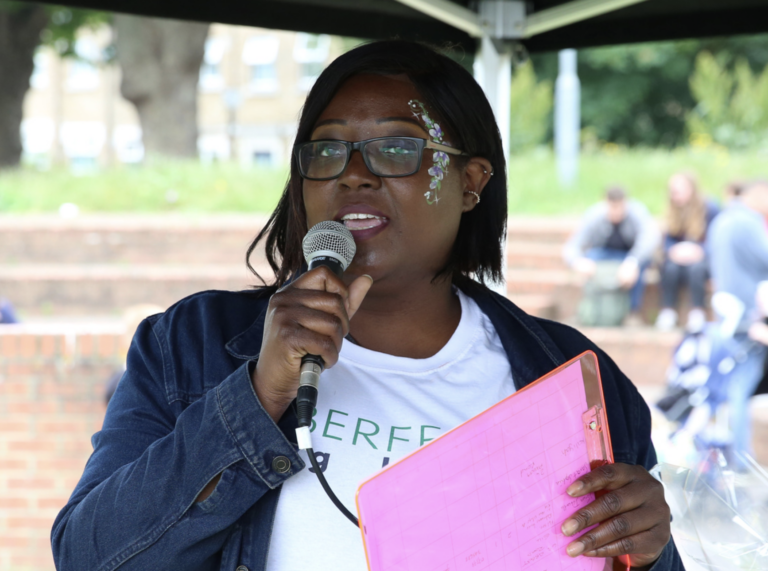
In 2022, the partnership hosted a Summer Jubilee Party, and ran workshops with residents to prepare and decorate the area with bunting. The event included a bake-off, dressing up box for children, community stalls, arts and crafts, face painting, and a creative competition, with residents submitting photos, poems, or drawings.

Investing in young people

Providing local youth activities

In response to community feedback about young residents’ challenges in getting to youth activities in the wider area, Big Local funding was invested in creating local opportunities. For example, a weekly Tiny Tots club, which provided free support to parents and carers who were unable to access groups outside of Aberfeldy. 

Big Local funding was used to sponsor the local football club – Aberfeldy FC. The funding helped develop under-14s and under-16s youth teams (providing for kit, equipment, a training venue, and league entry fees), and a drop-in youth club for 12 to 18 year olds. 

Towards the end of Big Local, the partnership worked with Future Kidz Development (a local organisation) to support the Future Stars Summer Camp, which had 75 participants in 2023 and ran again the following year. The five-week SEND-friendly programme was open to children aged 5 to 15, offering activities like dodgeball, handball, basketball, tag rugby, and football, with regular tournaments. 

Building on the success of collaborating with Future Kidz Development, the partnership worked with them to offer more events, such as a certificate in sports leadership for young people.

Two men wearing boxing gloves leaning on a boxing ring rope and smiling at the camera.
Members of Aberfeldy Boxing Club (credit: Zute Lightfoot)

How the Big Local area spent their funding

Each Big Local area received approximately £1.2 million (ranging from £1.199 mil to 1.209 mil) to spend over 10–15 years, depending on how much additional funding they accessed from Local Trust to address specific needs. For example, to bring people together at the start of the programme or to access training and support. This has been categorised for areas and at the programme level based on reports received from areas.

Partnerships chose their own priorities and categories for reporting, and were encouraged to use broad categories so they could use the funding flexibly. All areas spent a significant amount of money on Big Local delivery costs’ such as workers’ salaries, stationery and IT equipment. You can find out more about programme level spend in this article. This is how Aberfeldy Big Local told Local Trust they used their Big Local funding.

Big Local delivery costs
56% 
Community grants, events and activities
20% 
Community engagement and research
9% 
Community spaces
7% 
Health, wellbeing and sports
4% 
Young people and children
3% 
Other priority projects
1% 
Source: Aberfeldy area plans and spend reports

References

Office for National Statistics (ONS) (2023d) UK Census 2021: Religion: Muslim’. (Accessed 21 August 2025) 

Office for National Statistics (ONS) (2023e) UK Census 2021: Religion: Christian’. (Accessed 21 August 2025) 

Willmott Dixon (undated) Aberfeldy Village, Tower Hamlets’. Available at: willmottdixon.co.uk/projects/aberfeldy-village-tower-hamlets (Accessed 26 August 2025)