DY10 - Horsefair, Broadwaters and Greenhill
Key points
- The partnership invested in developing residents as volunteers and community leaders, and in new and existing community groups to deliver activity locally.
- They acted as a convenor in the area, bringing people and organisations together in networks and forums to deliver projects and activities to meet the needs of the community.
- They developed local assets, including parks and green spaces, into opportunities for improving the area and increasing resident participation.
About the Big Local area
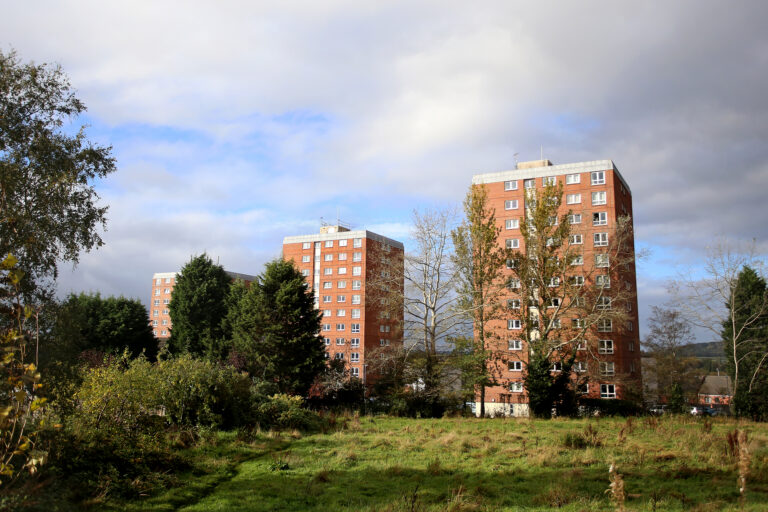
Big Local DY10 was named after the area’s postal code and based in Kidderminster, an historic market town located 20 miles southwest of Birmingham and 12 miles north of Worcester. The area included three distinct neighbourhoods: Horsefair, Broadwaters, and Greenhill. It was referred to locally as Big Local DY10 HBG.
DY10 ranked among the top 20 per cent of the most deprived regions in England (MHCLG, 2019). With a population of 7,863, there was a 12 per cent increase between 2011 and 2021 (ONS, 2012; 2022).
The area had more young people and people from an Asian or Asian British background than the local authority’s average (ONS, 2023a; 2023b). Local assets included parks, a nature reserve, and the River Stour, as well as shops, primary schools, nurseries, religious establishments, and numerous community and volunteer groups. The area was served by a network of local buses as well as Kidderminster train station, with two primary roads running through DY10, with one separating the neighbourhoods of Greenhill and Horsefair.
How the Big Local area approached delivery
The DY10 Big Local partnership aimed to create “clean and safe neighbourhoods” capable of fostering increased interaction, confidence, aspiration and resilience. They consulted extensively with residents and partners to identify local needs and inform their priorities. Originally, these included the environment, health, wellbeing, community participation and youth engagement. During the Covid-19 pandemic, these evolved into financial resilience, health and wellbeing, climate change, and establishing a legacy organisation.
Throughout, the partnership saw their overall approach to delivery as strategic, responding intentionally to the specific needs of each neighbourhood. They focused on “growing people”: providing grants, establishing and supporting community groups to deliver activity, and creating opportunities for volunteering and skills development. This approach aimed to foster resilience and ensure project sustainability beyond Big Local.
DY10 Big Local commissioned and allocated funds to a range of organisations, investing in small grants and establishing networks and forums for stakeholder collaboration. This approach aimed to maximise resources and build local relationships. By 2023, they had distributed over £114,000 through small grants, which they felt had stimulated new ideas and opportunities for collaboration. They also invested in paid workers and organisations to build their own capacity as a group, allowing them to focus on the bigger picture in their work.
The partnership themselves remained largely consistent and close throughout. They consciously excluded councillors from taking part to ensure their work was led by residents with less historic opportunity to be heard, although they found it challenging to attract a diverse representation from the whole community. They maintained transparency by establishing clear processes around decision-making and publishing meeting notes online. Individual members went on to further develop their skills, experience, and confidence; some moved on to elected council positions and contributed to wider stakeholder groups, including initiatives such as pilots for Universal Basic Income.
A Big Local partnership was a group made up of at least eight people that guided the overall direction of delivery in a Big Local area.
What the Big Local area did
Community engagement
Working with residents to build capacity and improve key areas
Big Local DY10 worked with local people and traders to improve important areas. In doing so, they developed resident capacity, established strong local groups, and fostered leadership in the community.
Their first focus was the shopping centre and surrounding streets of the historic Horsefair area, which were in need of improvement. Early on, the partnership brought together local people and traders to form a new group, ‘Horsefair and Proud.’ This group made tangible improvements to the area through litter picks, clearing fly tipping, planting bulbs, painting shops and installing a wall mural. It also developed its own constitution and fostered community engagement through Facebook, gathering over 2,000 members.
Horsefair and Proud grew less and less reliant on Big Local funding and support, and by the end of the programme was self-sufficient enough to continue its work through organising fundraisers and events, as well as successful advocacy efforts (including the restoration of a local clock).
The partnership replicated this approach in Sion Hill, an area of Broadwaters with relatively high levels of deprivation and isolation. Extensive outreach efforts were conducted with the support of their community development worker and partnership members familiar with Sion Hill, fostering new relationships with shop owners, local organisations, and residents. Eventually, several residents formed the Sion Hill Community Group to organise activities in and for the area, quickly gaining enough momentum to operate largely independently, and continuing to thrive after initial Big Local funding.
Working collaboratively
Increasing participation through improving the local environment
The DY10 Big Local partnership wanted to improve both community participation and local green spaces. They focused on supporting community groups, such as Horsefair and Proud and local ‘Friends of’ parks groups, to invest in local parks and organise popular outdoor events and activities.
Enhancements made local parks more inviting and accessible. Examples included funding Friends of Broadwaters to install outdoor play equipment; Friends of Springfield to establish a fitness trail and footpath; and the installation of several memorial benches. In 2018, the Friends of Springfield Park and Wyre Forest Special School collaborated to establish a new community café within Springfield Park, providing a communal facility for which the partnership funded furniture, kitchenware, and volunteer training.
Big Local-funded investments led to a surge in events and activities that brought residents together across the neighbourhoods, as well as significant improvements to the local environment. They also created an upswing in local volunteering, with community groups becoming stronger, more self-sufficient, and interconnected.
Investing in young people
Collaborating on a comprehensive summer youth programme
Among the DY10 Big Local partnership’s goals for children and young people was to offer engaging and meaningful activities, particularly during the summer holidays. Early in the programme, the partnership brought together organisations and agencies over a series of breakfast meetings to organise a comprehensive summer activities programme.
The summer youth programme delivered an array of sports, games, forest sleepovers and picnics. The first programme in 2016 was attended by 1,100 children, followed by 1,400 attendees the following year. By 2018, the partnership transitioned to a more supportive role, allowing other organisations and groups to lead delivery. The programme evolved over time, with activities expanding to more locations in the area. A “Big Picnic” was eventually launched, providing partners with an opportunity to share information about their support and services.
The Big Local DY10 partnership felt the summer activities programme successfully engaged local young people, and improved partnership working among local youth agencies. Conversations with parents also highlighted feelings of isolation, which led to the partnership establishing a new community space in a flat in Horsefair. Following renovations, the space became a hub for health and wellbeing activities, benefiting local families, and provided the Big Local DY10 partnership with a visible presence in the neighbourhood.
Health and wellbeing
Working with a local organisation to support families and increase volunteering
The DY10 Big Local partnership worked to improve the health and wellbeing of families across the Big Local area, and in doing so also increased community participation through volunteer training. Early on, the partnership established a strong rapport with Home-Start Wyre Forest. In 2019, they commissioned the organisation to support families in vulnerable situations over three years through weekly after- and pre-school family sessions, home visits, and training and recruiting residents as family-support volunteers.
Covid-19 significantly disrupted these initial plans, and the partnership and Home-Start Wyre Forest worked to adapt. Updated initiatives included running online health and wellbeing groups for parents, remote befriending services, and delivering a range of creative remote activities including cooking and movie nights. Home-Start Wyre Forest maintained contact with families throughout, ensuring ongoing support and continuity, while training new volunteers.
Home-Start Wyre Forest reported that the project helped isolated families forge friendships and feel a sense of belonging. It also contributed to increased capacity in the area: by 2021, the organisation had supported 131 children and 62 families, and trained and recruited 19 volunteers.
Responding to crisis and urgent need
Adapting strategy by working directly with the local community
During the Covid-19 pandemic, the Big Local DY10 partnership pivoted their overall strategy, crafting a new recovery plan in response to immediate needs. Through their grants programme, approximately £70,000 was swiftly allocated to local groups, schools, and organisations for the provision of food, essential resources, activity packs for families and isolated residents, and health and safety equipment.
Working with local volunteers, agencies and organisations from their summer programme breakfast meetings, the partnership also formed the online Big Local DY10 HBG Community Forum, which met fortnightly to share information and challenges, and join up response activity. New initiatives were launched to provide vital financial support through Citizens Advice and employment coaching.
Partnership members reflected that the Community Forum had significantly raised their profile, with other local organisations coming to them for support and advice based on their experience and local knowledge. Following the pandemic, the partnership also consulted with partners and the community to inform their post-Covid-19 recovery plan, identifying financial recovery, employment, and health and wellbeing as key focuses for the community in the long term.
How the Big Local area spent their funding
Each Big Local area received approximately £1.2 million (ranging from £1.199 mil to 1.209 mil) to spend over 10–15 years, depending on how much additional funding they accessed from Local Trust to address specific needs. For example, to bring people together at the start of the programme or to access training and support. This has been categorised for areas and at the programme level based on reports received from areas.
Partnerships chose their own priorities and categories for reporting, and were encouraged to use broad categories so they could use the funding flexibly. All areas spent a significant amount of money on ‘Big Local delivery costs’ such as workers’ salaries, stationery and IT equipment. You can find out more about programme level spend in this article. This is how DY10 Big Local told Local Trust they used their Big Local funding.
References
Ministry of Housing, Communities and Local Government (MHCLG) (2019) ‘English indices of deprivation 2019’. (Accessed 16 October 2024)
Office for National Statistics (ONS) (2012) ‘UK Census 2011: All persons’. (Accessed 16 October 2024)
Office for National Statistics (ONS) (2022a) ‘UK Census 2021: All persons’. (Accessed 16 October 2024)
Office for National Statistics (ONS) (2022b) ‘UK Census 2021: Age structure of the population: Population aged under 16’. (Accessed 16 October 2024)
Office for National Statistics (ONS) (2023) ‘UK Census 2021: Ethnic group: White: English, Welsh, Scottish, Northern Irish or British’. (Accessed 18 October 2024)