St James Street Area
Key points
- Residents were empowered through grants, events, and collaboration spaces to connect, celebrate diversity, and showcase talent.
- Local equity-focused organisations were funded to provide youth education, clubs, and life skills support, helping reduce social inequities.
- Spaces were enhanced environmentally, artistically, and culturally by collaborating with the community to create a unique identity.
About the Big Local area
The St. James Street Big Local area in Walthamstow (in east London), was home to a culturally rich community of 7,838 people, with around a quarter of residents identifying as Muslim (ONS, 2022; ONS, 2023). The area boasted a vibrant high street, with shops, a bustling street market, and a community hub. The area had undergone significant development, with modern housing connected to central London attracting commuters and creating a transient community.
Part of the area was ranked in the 20 per cent most deprived communities in the country (MHCLG, 2019). Approximately 25 per cent of children lived in low-income households (DWP, 2025a), and youth unemployment was higher than wider London (DWP, 2025b; 2025c). There were high rates of personal theft, with over twice the incidents compared with London (Police UK, 2025).
How the Big Local area approached delivery
The St. James Street Big Local partnership ran an initial community consultation between 2012 and 2014. They gathered opinions through an online survey and in person, at events, schools, older people’s homes, churches and mosques, and on the street. Residents were asked to rank ideas, helping create priorities. Priorities included: bringing people together through events and activities (‘People’); improving the neighbourhood’s greenery and appearance (‘Places’); and supporting entrepreneurs and businesses for community growth (‘Business’); with health and wellbeing added at the onset of the Covid-19 pandemic. Community consultation also revealed that many long-term residents felt left behind, struggling to afford to live or do business in the area, and local charities facing challenges with rising costs.
Each priority had a sub-group, and decisions were generally made by building consensus rather than voting. The partnership fostered strong collaborative relationships with organisations, whilst ensuring residents had decision-making control.
The Locally Trusted Organisation (LTO) faced internal challenges, limiting their capacity to support the partnership. For example, ensuring that workers (paid using Big Local funds and managed by the LTO) were recruited appropriately and met the needs of Big Local work. While the partnership valued workers and felt able to manage them, this was legally the responsibility of the LTO. As a result, when issues arose (like unmet tasks) the partnership felt uncertain how to address them.
Towards the end of Big Local, a second LTO was brought in alongside the first, to support the partnership with allocating and monitoring larger legacy-based grants. Although not based in the St. James Street area, their experience was specifically suited to the partnership’s needs.
Community consultations throughout Big Local helped the partnership adapt. For example, by revising the grant application process to address inequality and inclusion, delivering more events to unite the community, and prioritising young people, mental health, and wellbeing in the allocation of £200,000 in community grants.
The partnership felt that their legacy was a more empowered, connected resident network that came together to celebrate culture and build social cohesion. Big Local funding enabled equitable programmes, that supported young people’s development and leveraged community talents to enhance spaces, stimulate local ownership, and forge a unique identity. They also saw some of the physical improvements to the area, such as a community mural, as a legacy of their work.
A locally trusted organisation (LTO) was the organisation chosen by people in a Big Local area or the partnership to administer and account for funding, and/or deliver activities or services on behalf of a partnership. Areas might have worked with more than one locally trusted organisation depending on the plan and the skills and resources required.
What the Big Local area did
Community engagement
Celebrating talent and growing networks
Through consultation, St. James Street residents shared a desire for events to foster connections across cultures, religions, and the community. Grants and support from Big Local workers empowered residents to organise events that were meaningful to their communities and encouraged connection. Supported activities included an Asian club for older women, tree planting, mushroom growing, Music in the Village (sessions organised and previously funded by older people), a Chinese New Year Celebration, and street parties.
The partnership also organised events, including annual Christmas carol concerts, summer fairs, jumble trails, International Women’s Day celebrations, and Eid celebrations. With significant turnout, the community came together to celebrate local talent. This helped strengthen connections between Big Local, residents, local organisations, and businesses, and develop networks of resident volunteers (some of whom later joined the partnership). Additionally, these gatherings helped build appreciation and knowledge of diverse cultures.
Working collaboratively
Celebrating Eid to expand inclusion
The St. James Street Big Local partnership felt they needed to do more to engage with different cultures. They aimed to engage the local Muslim community and other residents through an Eid celebration event.
The first Eid celebration took place in 2024, however, it did not engage residents as much as the partnership had hoped. After reviewing their approach, they realised they had not consulted residents well enough before the event to ensure it met expectations.
Towards the end of Big Local, in 2025, with the support of the Big Local funded Community Outreach Manager, they asked community groups and residents what they wanted in an Eid Event. Many of these groups had previously received grants from St. James Street Big Local. They signposted the partnership to other important people to involve, and working together they designed and delivered an Eid event.
Supported by Big Local funding and hosted at The Mill (a community hub), the event included food, children’s activities Bollywood dance workshops, Dhol drumming, and stalls selling Islamic art. It led to more diverse attendance at other community activities and venues, due to increased awareness of what was available.
Working collaboratively meant that the wider community were invested in the event and its success. Groups built on these relationships to develop plans to secure funding and continue the momentum to hold Eid celebrations in the community in the future.
Investing in young people
Supporting equity through education and life skills
Responding to local systemic inequities and a need for more inclusive approaches, the St. James Street partnership focused on improving equity for young people. Big Local funding was allocated to local organisations that understood and aimed to address structural social and racial inequities. For example, Salaam Peace was funded to deliver study support and life skills sessions for young people aged 9 to 16.
From early 2021 to the end of Big Local, weekly sessions were held in a safe environment. Life skills workshops explored communication, political awareness, and financial literacy. The programme sustained engagement, demonstrated academic progress, generated a sense of community, introduced positive role models, and enhanced participants’ organisational skills and independence. The partnership felt this initiative invested in young residents’ futures and helped address local social and racial inequalities, by offering targeted support to those impacted by systemic challenges.
Grants also supported holiday clubs and helped organisations expand their reach (like growing the Forest School team to run more sessions). During the Covid-19 pandemic, £13,500 from a recovery fund was allocated to five primary schools to provide IT equipment for homeschooling. These efforts supported young people’s development and strengthened ties with schools and youth organisations.
Funding culturally-appropriate counselling and youth forums
As part of a legacy project, £100,000 of Big Local funding was invested in Spark2Life, a community-inspired, Black-led charity that empowers young people to navigate life, to reduce the risk of offending. The funding enabled the organisation to recruit two new staff members.
Their Community Engagement Worker established a youth forum and a group for residents from under-represented communities to express their needs and co-produce positive long-term changes. Their Therapeutic Counsellor offered free and low-cost culturally-competent counselling to residents and provided schools with awareness sessions to help prevent violence, criminal activity, and criminal exploitation.
The partnership hoped that this legacy grant would support the understanding of young people’s needs, advocate for change on systemic inequalities, and support young people’s skills development beyond Big Local.
Local economy
Transforming unused spaces for community benefit
An unused car park that St. James Street residents felt was unsafe to walk through at night, was replaced by CRATE. This box-style unit became a thriving hub for small businesses, community activities, and social entrepreneurs. The partnership played a vital role in its development, with £20,000 of Big Local funding invested early on, and close working with the local authority and CRATE to ensure success.
The partnership went on to support businesses and organisations through grants and collaborations, and an evaluation identified that 104 people were employed through the venue. Grants were given to an Afro-Caribbean kitchen enterprise and to Salaam Peace (the organisation running the homework club) to grow, with activities and premises at CRATE.
Community assets and spaces
Enhancing the environment through community greening
The St. James Big Local partnership sought to enhance the local urban area and upgrade green infrastructure. This involved revitalising Mission Grove and Buxton Road, two areas dominated by cars and described by residents as two of the most grey streets in the neighbourhood. The partnership and residents felt improvements were also needed to address the area’s climate change risks, including flooding and extreme heat.
Big Local funding supported the creation of the Buxton Gardens community greening project. The partnership worked to redesign the streets in collaboration with the London Borough of Waltham Forest, a local architect, schools, and the community, with additional funding from Greater London Authority’s Grow Back Greener Fund. They created spaces that offered respite, recreational opportunities, and safe outdoor meeting areas. The initiative also promoted active travel, particularly among schoolchildren and their parents and carers, and the partnership thought it increased residents’ pride in the area.
By introducing trees, green verges, shrubs, flowering plants, and grasses, the green spaces created shade, enhanced flood resilience, and added amenities.
Supporting artists to enhance the area
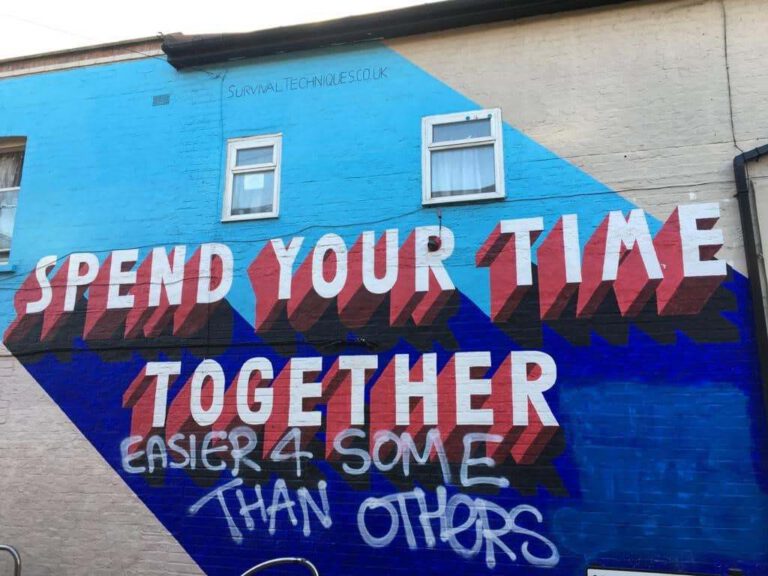
Big Local funding was allocated as grants for street art installations, mosaics, and murals, with the aim of fostering a unique community identity which residents could take pride in. The pieces formed a self-guided street art tour with nine stops, hosted on the St. James Street Big Local website. Each stop shared stories behind the art and the artists, celebrating local talent.
Additional improvements included the 1b Gallery, a window gallery created in collaboration with local groups and an artist collective. They secured permission from UK Power Networks to host art at an electricity substation, which promoted projects, celebrated initiatives, and communicated local interests.
Towards the end of Big Local, the partnership planned to create a signature sign for the railway bridge (inspired by Camden Lock) to celebrate the area’s social history and multicultural identity. When painting the bridge was no longer possible, they found a new location for a mural on the high street near St. James Street train station, on the side of a local community hub and kitchen. They selected a local artist to come up with the design, using the original colours and typography of Great Eastern Railway, which ran through St. James Street station from 1870 and played a key role in bringing migrant workers to the area. The final mural created a new landmark for St. James Street, honouring the contribution of migrant communities and celebrating the area’s collective history.
How the Big Local area spent their funding
Each Big Local area received approximately £1.2 million (ranging from £1.199 mil to 1.209 mil) to spend over 10–15 years, depending on how much additional funding they accessed from Local Trust to address specific needs. For example, to bring people together at the start of the programme or to access training and support. This has been categorised for areas and at the programme level based on reports received from areas.
Partnerships chose their own priorities and categories for reporting, and were encouraged to use broad categories so they could use the funding flexibly. All areas spent a significant amount of money on‘Big Local delivery costs’ such as workers’ salaries, stationery and IT equipment. You can find out more about programme level spend in this article. This is how St. James Street Area Big Local told Local Trust they used their Big Local funding.
References
Department for Work and Pensions (DWP) (2025a) ‘Children in low income families: local area statistics’. Available at: gov.uk/government/statistics/children-in-low-income-families-local-area-statistics-2014-to-2024 (Accessed 10 October 2025)
Department for Work and Pensions (DWP) (2025b) ‘People on universal credit: not in employment’. Available at: gov.uk/government/statistics/dwp-benefits-statistics-august-2025 (Accessed 10 October 2025)
Department for Work and Pensions (DWP) (2025c) ‘Jobseekers allowance’. Available at: gov.uk/government/statistics/dwp-benefits-statistics-august-2025 (Accessed 10 October 2025)
Ministry of Housing, Communities & Local Government (MHCLG) (2019) ‘English indices of deprivation 2019’. Available at: gov.uk/government/statistics/english-indices-of-deprivation-2019 (Accessed 10 October 2025)
Office for National Statistics (ONS) (2022) ‘UK Census 2021: All persons’. Available at: ons.gov.uk/peoplepopulationandcommunity/populationandmigration/populationestimates/datasets/populationandhouseholdestimatesenglandandwalescensus2021 (Accessed 10 October 2025)
Office for National Statistics (ONS) (2023a) ‘UK Census 2021: Religion: Muslim’. Available at: ons.gov.uk/datasets/TS030/editions/2021/versions/3 (Accessed 10 October 2025)
Police UK (2025) ‘Crime type: Theft from the person offences (12 month total)’. Available at: data.police.uk/data/ (Accessed 10 October 2025)