Whitley

A red-brick building with a banner on railings reading 'Whitley Community Museum'.
Whitley Community Museum (credit: Whitley Community Development Association)
Reading, South East 
Awarded £1,199,500 of Big Local funding from 2012 

Key points

  • Whitley Big Local partnership established the Whitley Community Development Association, the beating heart of Whitley’, to strengthen community control of local resources.
  • The partnership set up a new social club and affordable café which served as a hub for residents to access activities, support and services.
  • Community researchers were trained to identify resident needs and were commissioned to explore a range of issues and identify solutions.

About the Big Local area

The Whitley Big Local area covered part of the large suburb of Whitley in south Reading, Berkshire, and was bounded by the M4 to the south and the A33 to the west. The population within the boundary grew by 9 per cent between 2011 and 2021, to nearly 10,000 residents (ONS, 2012; 2022a). Residents were from diverse backgrounds with nearly a third born outside the UK (ONS, 2023a). Nearly half of residents lived in rented social housing, compared to 16 per cent in Reading (ONS, 2023b).

The area experienced higher incidences of crime than the rest of the city (Police UK, 2024). Compared to the Reading average, the area had a higher proportion of people who were unemployed, and with no qualifications (ONS, 2022b; 2023c). Although it ranked in one of the 30 per cent most deprived areas in England (MCHLG, 2019), the area had established community groups and assets such as a leisure centre, a park and recreation ground, schools, businesses and a community centre. The University of Reading was also nearby and became a key partner for the partnership.

How the Big Local area approached delivery

Whitley Big Local partnership wanted residents to feel proud, connected and empowered.

Whitley is a strong, proud and diverse community that wants to own and control our future and be respected.” 
Partnership member 

Challenging perceptions of the area was one of the partnership’s key priorities, as they felt Whitley had previously been defined by others in negative terms that didn’t reflect the area’s strengths. They engaged residents and partner organisations to encourage community participation, and addressed underlying issues such as food poverty and social isolation. They also focused on adapting existing community spaces to future needs, and making it easier for people to access facilities and services.

From the start, Whitley Big Local partnership strived to run activities with’ residents, rather than for’ residents. They were supported by multiple paid workers, including a key co-ordinating role. The partnership were trained in community development and worked with residents, local businesses, organisations and agencies to ensure activities were joined up and delivered what the community wanted. Through community research, they put residents in the lead to explore local issues and solutions. They also distributed grants to give residents the power to deliver their own projects to improve the area. 

In 2016, the partnership set up a new charity, Whitley Community Development Association (Whitley CDA). The organisation’s focus expanded beyond the Big Local boundary to increase the benefit of their activities to more people. Partnership members were also trustees of Whitley CDA and often used this branding when referring to themselves and their work. This led to some conflation around roles and responsibilities between Big Local and Whitley CDA but also enabled a strong programme of work reaching Big Local residents and beyond. This resident-led organisation grew in experience and profile whilst delivering, managing and supporting Big Local projects. Five years later, after significant efforts to develop their governance and finance, Whitley CDA became the Locally Trusted Organisation (LTO) for the partnership, taking over management of the Big Local funding.

A Big Local partnership was a group made up of at least eight people that guided the overall direction of delivery in a Big Local area.

A locally trusted organisation (LTO) was the organisation chosen by people in a Big Local area or the partnership to administer and account for funding, and/​or deliver activities or services on behalf of a partnership. Areas might have worked with more than one locally trusted organisation depending on the plan and the skills and resources required.

What the Big Local area did

Community engagement

Developing residents as community researchers 

After developing their first Big Local plan, the partnership wanted additional insight from residents about how to address local issues. Working with the University of Reading, they created the Whitley Researchers, a group of residents, staff and student volunteers from the university.

Whitley Researchers were trained in research skills and methods, and paid as part-time community researchers. They were commissioned to capture insight on issues such as public transport needs, young people’s aspirations, financial exclusion, and barriers to services and employment. Their research not only asked residents about the issues they faced but also for ideas and solutions. This resulted in practical recommendations such as changing a local bus route to improve access to the local hospital, GP surgery and supermarkets.

Using this research obviously benefits the recipients but being a part of the process empowers us as residents – we feel as though the whole project belongs to us.” 
Resident 

Whitley Researchers built a strong reputation for cross-sector partnerships and generated income from their work. Those involved felt they had gained skills, confidence and a sense of empowerment. The programme helped the partnership develop a closer relationship with the University of Reading and helped the university create stronger links with residents.

A Big Local Plan set out what changes the partnership planned to make, how they planned to deliver on this and how funds were to be allocated. It was written for themselves, their community and Local Trust, as a guide and action plan.

Community assets and spaces

Creating a social club and café for residents to connect and access support

Whitley Big Local’s lasting legacy in the area was the community-run Whitley Social Club and Café. Early consultation had shown that residents lacked opportunities to meet, as a council-run social club had closed down and the area didn’t have an affordable café. The partnership decided to fill the gap. With help from resident donations, volunteer and business support, and Big Local funding, they invested in the refurbishment of the café and bar area within the local community centre. 

They were keen to develop the space more extensively to create an accessible and multipurpose community space. In 2016, Whitley Community Development Association signed a 15-year lease with the council to open the café and bar area as the Whitley Social Club and Café. The lease gave the partnership confidence to complete a full refurbishment of the space to support more activities, including a new kitchen so the café could serve meals. They also invested in marketing and staff so the space could be open more frequently. 

Two years later, the café opened within the newly expanded community centre, the South Reading Community Hub. An affordable café by day and social club during evenings and weekends, it soon became a central hub, delivering activities, support and services such as Citizens Advice, a surplus food project, and health and wellbeing activities.

We are proud to say we now have a thriving social hub open during the day and evenings, all week and weekend. This is the centre of our operation and the centre of all of our projects.” 
Partnership member 

Place-based pride and connection

Changing the perception of the area with Whitley Community Museum 

The partnership wanted to help residents take pride in Whitley. They allocated funds to the creation of Whitley Community Museum, a volunteer-led project engaging the community to record, remember and celebrate Whitley’s past. Volunteers collected photos, memories and artefacts donated by residents and displayed them at regular events. A permanent home was found for the collection at the Whitley Social Club and Café in 2019. This helped create a new, positive shared narrative about Whitley.

Whitley Community was, is, has and will always be a thriving community with a museum to back up all these stories from a mere photograph or document.” 
Partnership member 

Working collaboratively

Working with partners and residents to distribute surplus food

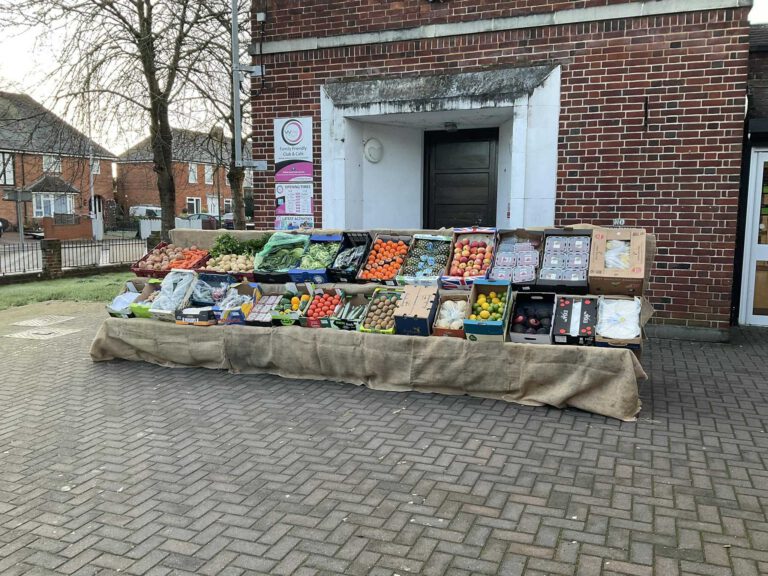
To reduce food poverty and food waste, Whitley Big Local partnership set up a surplus food distribution scheme with local supermarkets. Volunteers and staff distributed unsold, surplus food free to anyone who needed it, without means testing. Building on the success of the initiative, during the Covid-19 pandemic the Whitley Social Club and Café became a distribution hub, and they delivered food parcels to over 70 people a day for four days a week.

The project helped the partnership develop their relationships with police, local businesses, council and other voluntary agencies. Trust between residents and staff in the hub was strengthened as they supported residents and signposted them to services in the area. Described as a lifeline by residents, the food surplus project continued after the pandemic, expanding its opening hours to include weekends.

Our food surplus scheme has seen an increase in demand as a result of more need. The safe place that we offer and our non-judgemental approach has underpinned this. It has continued to allow the local community to benefit from this and is valuable to businesses to reduce waste.” 
Partnership member 
A well-stocked fruit and vegetable stall in front of a red-brick building.
Surplus food distributed by Whitley Community Development Association (credit: Whitley Community Development Association)

Health and wellbeing

Improving access to health and wellbeing initiatives for specific community groups

Whitley Big Local partnership collaborated with local partners on a range of initiatives to improve residents’ health and wellbeing. The partnership supported the University of Reading and residents to set up Marvellous Mums Unite, a project which aimed to tackle social inequality by building confidence among mothers in Whitley, as well as offering employability skills sessions. During the 10-week course, participants met weekly in the community café to discuss challenges and ways to overcome these. By the end, participants felt more connected to each other and some went on to further training or to start businesses as a result of the confidence they’d gained.

I came to the programme as I was very devastated and stressed. I needed someone to talk to, meet new people and not be isolated by myself. Now I can proudly say I gained self-confidence.” 
Resident 

Towards the end of Big Local, the partnership worked with the Royal Berkshire Hospital’s Patient Experience Engagement Team (PEET) to improve residents’ access to health services. They hosted a monthly walk-in clinic at the South Reading Community Hub for residents to access free health checks and medical advice during the week. Part-funded by the hospital and delivered by nurses and volunteers, the service was popular, with some residents accessing it regularly. It expanded with an additional weekend clinic to make it more accessible for residents who worked during the week.

Resident leadership

Establishing a resident-led legacy organisation

From the beginning, the Whitley Big Local partnership wanted the community to have greater control over assets and resources, including holding leases, employing staff and eventually managing Big Local funding. In 2016 they established a new charity, the resident-led Whitley Community Development Association (Whitley CDA), to steer Whitley Big Local and negotiate with the council before eventually taking on the lease for the new social club and café. 

The partnership focused on strengthening Whitley CDA’s capacity so it could continue as a self-sustaining legacy of the Big Local programme. The new organisation successfully grew their profile locally, employing residents to support delivery, developing community projects and establishing close relationships with residents and local partners. 

Whitley CDA won the Pride of Reading Charity of the Year in 2021. By the end of Big Local, they were focused on sustaining and developing key projects, such as the Whitley Social Club and Café, and on strengthening the organisation’s capacity to continue beyond their initial funding.

As a result of our working with the community from our base at the Community café, we have earned the title the beating heart of Whitley.’” 
Partnership member 

How the Big Local area spent their funding

Each Big Local area received approximately £1.2 million (ranging from £1.199 mil to 1.209 mil) to spend over 10–15 years, depending on how much additional funding they accessed from Local Trust to address specific needs. For example, to bring people together at the start of the programme or to access training and support. This has been categorised for areas and at the programme level based on reports received from areas.

Partnerships chose their own priorities and categories for reporting, and were encouraged to use broad categories so they could use the funding flexibly. All areas spent a significant amount of money on Big Local delivery costs’ such as workers’ salaries, stationery and IT equipment. You can find out more about programme level spend in this article. This is how Whitley Big Local told Local Trust they used their Big Local funding.

Big Local delivery costs
42% 
Community development and research
22% 
Whitley social club and café
12% 
Small grants programme
10% 
Financial inclusion and social enterprise
5% 
Surplus food project
4% 
Community transport scheme
3% 
Source: Whitley area plans and spend reports

References

Department for Work and Pensions (DWP) (2023) Universal credit claimants’. (Accessed 20 August 2025)

Ministry of Housing, Communities & Local Government (MHCLG) (2019) English indices of deprivation 2019’. (Accessed 5 December 2024) 

Office for National Statistics (ONS) (2012) UK Census 2011: All persons’. (Accessed 5 December 2024) 

Office for National Statistics (ONS) (2022a) UK Census 2021: All persons’. (Accessed 5 December 2024) 

Office for National Statistics (ONS) (2022b) UK Census 2021: Economic activity status, England and Wales’. (Accessed 5 December 2024) 

Office for National Statistics (ONS) (2023a) UK Census 2021: Country of birth’. (Accessed 16 December 2024)

Office for National Statistics (ONS) (2023b) UK Census 2021: Social rented housing’. (Accessed 5 December 2024)

Office for National Statistics (ONS) (2023c) UK Census 2021: Highest level of qualification: No qualifications’. (Accessed 5 December 2024)

Police UK (2024) Crime type: All crimes (12 month total)’. Available at: data.police.uk/data/ (Accessed 5 December 2024)