Episode 2: Restoring ruins in Northumberland
Chris Allen
Hello and welcome to the Community Power Podcast, a new weekly series brought to you by Local Trust and the community wealth fund campaigning to ensure the next wave of dormant assets is committed to supporting our communities. My name is Chris Allen, and in this series, I’m going to be teasing out some of the best examples of what’s happening in communities through the experiences of those living and working on the frontline. I’ll be focusing in particular on what happens when you give local people the money, the power and the assets to make a difference in their neighbourhoods. With me is Beth Lazenby, who is our series producer. Beth, who have we got this week?
Beth Lazenby
So this week, Chris, we’ve got Barry Mead, who was actually the Community Archaeologist of the Year in 2019. and he’s going to be talking to us about a resident led regeneration project that he helped lead on in Northumberland.
Chris Allen
Indeed. And this is my first virtual journey going up towards the north east. First of all, I asked Barry to describe for us where he both works and lives.
Barry Mead
It’s quite a variety for such a small area, and it covers the villages of Cresswell, where I live, Ellington, Linton and Lynemouth.
Chris Allen
I appreciate you giving all the pronunciations to me so I can’t go wrong.
Barry Mead
Yeah, which is good coming from me as a almost a Cockney who now lives up in Northumberland. Well, I think that’s how they pronounce them anyway. But Cresswell itself, where I live, where I’m really incredibly lucky to live and work. We’re right on the coast, on the Northumberland coast, a place called Druridge Bay, which is absolutely stunning. On my doorstep here, literally at the bottom of the village green, I have a six mile sandy beach backed by sand dunes.Down there every day with my greyhound and what have you. Absolutely stunning. But then just in land from us, we’ve got the other three villages of Ellington, Linton, Lynemouth. These are all former pit villages. And no doubt, as listeners are well aware, the North East was really one of the mining capitals of the world at one time. But with pit closures, which has been going on since the 60s, it’s had a huge impact on South East Northumberland and certainly Ellington Linton and Lynemouth really only came about because of coal mining, and when the pits closed, we end up with a huge amount of deprivation as a result of it. And although things are a lot better now, we still have some of the highest unemployment rates in the country, etc, etc.
But what, what amazes me is, I’m incredibly lucky living on the coast here, but the folk up here, and I’ve lived all over the country, they are definitely canny. Me, honestly, yeah, I speak funny, yeah, but they know who I am straightaway, as soon as I’ve opened me gob. But they are so incredibly friendly. It doesn’t matter where you’re from or maybe that they really embrace you. So that’s one of the reasons I love being up here. You know, despite all the hardships and the problems, people are amazingly friendly. So it’s a brilliant part of the world. I love it. So I can never move south again.
Chris Allen
I was gonna ask you there about community, because obviously, when the pits went there was a sort of ripping out of community in many ways as well. It wasn’t just about the jobs and the unemployment, but you’re saying there actually it’s a very positive community. But the kind of projects you’re getting involved in sort of, obviously, bringing people together. That’s a key aspect.
Barry Mead
Too too right. And I’m not saying it’s absolutely, it’s perfect here, it isn’t. There’s still all sorts of issues up here, but no projects like this,when this started, was it 10 years ago now? Blooming heck.
Chris Allen
We’ve all gone a bit grey in that time.
Barry Mead
Yeah, I’m only 21. But no it is brilliant. And obviously, and as part of the initial process for the CELL, lot of consultation, what do the community value? What do they want to say, what they want to do? And I was really pleased that things like heritage, environment came out as one of the sort of things that they were keen to develop. And yeah, my passion being archaeology and heritage, straight away, I got involved with the environment group, and I’ve been involved with it, yeah, the whole 10 years, and it’s brilliant. You get to meet people, and this is what these projects are raising all this funding and what have you for huge restoration projects. Takes a lot of time and effort, but when you’re working with people who share your passion, they don’t half make it a lot easier. And with all these projects, you get your mindset, “why the heck am I bothering? And not another blooming meeting. Can’t be bothered with all this paperwork.” But then you think of the end goal and the people you’re working with and that. So it’s all about people. I love the heritage, but getting the people, young and old, engaged, that’s what it’s all about, isn’t it really?
Chris Allen
You mentioned that you’re an archaeologist. It’s where your passion comes from. Where did that passion start off with you?
Barry Mead
I’ve no idea. I’m one of four children. There’s no history in my family of any interest in history or archaeology. When I left school, which is a lot of years ago now, I’m nearly 68 I joined the civil service in London, which I’m glad I did, because I hated the job so much I thought I cannot do this the rest of my life. And I’d always had an interest in history, and we’re going back to the 1970s here, and I went, but I love practical things. I love physical work. So I thought, in the end, after a few years in the civil service, let’s pack all this in. Let’s go to university. As a mature student, see if I can get in to read archaeology. And that was in 1977 and I did three years there. The best three years of my life went on loads of digs, and I’m still digging. I spend most of my summers digging up most of Northumberland. I’m always…
Chris Allen
If there’s a hole, it could have been you is that the case?
Barry Mead
I am brilliant. I am a human JCB. I’m not saying I find a lot, but I’m damn good at shifting the soil. I just love it. I can’t explain well, again, I love the digging, unearthing stuff. But again, you’re working with community volunteers. We’ve got the same interest, and we don’t half have a laugh. It’s just brilliant. I should die happy.
Chris Allen
Well not…
Barry Mead
Not just yet, I hope.
Chris Allen
So you talked there about getting people involved. And what about children, young people? Do they buy into this idea of history and digging stuff up?
Barry Mead
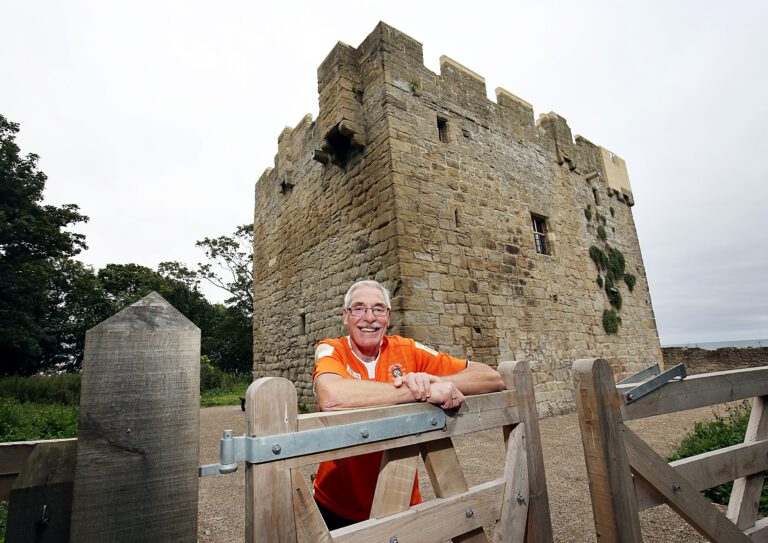
Absolutely crucial. One of the reasons that the Peel tower, this 14th century tower, which we’ve now saved. Every year Historic England produce what they call a heritage at risk register, which means if you get on that register, your building’s in a pretty poor state of repair, and if you don’t do anything soon, you’re in big trouble. And one of the reasons it was at risk was the amount of vandalism it was suffering from. I’m trying not to generalise, but it’s generally younger people were going there, having drinking sessions, smashing bottles against it, covering it with graffiti, breaking in, pushing off some of the stone work and generally making it a very unpleasant place and what have you. So it’s crucial to me to go into the first middle schools around it, work with the youngsters, take them artefacts, do what I call the hands on archaeology, but then get them to site to join in the digs and what have you, to uncover their heritage. And I’m not saying I’ll get through to every youngster that sort of works with us, but if I can just instil some sort of a passion or interest in their heritage – they might not become archaeologists – but hopefully, instead of vandalising the place that they’ll least respect it a bit more.
Chris Allen
And have you seen a sense of ownership from those who worked on it? You know, is it has that become their tower? We’ll talk about the tower in a minute. But is it their tower?
Barry Mead
Yeah. Well, funny enough, I started this project in 2014 so it takes a fair few years to raise all the money and do this. So let’s take seven or eight years, and we actually opened the tower in July of last year to visitors on one of our open days. One of the children who came in with his dad was one of the children I worked with three or four years ago in school. This was Ellington primary school, and then he was out on site, field walking with me and digging. And this child actually, on one day, found three sort of pieces of work flint, which is – I love work flint, I’m a pre historian – but this stuff he found is about 8000 years old.
Chris Allen
Wow.
Barry Mead
And the teacher took a brilliant photograph of me, hands up in the air, getting all very excited, like I do, and this child with this piece of flint.That’s now on the interpretation panels inside and outside the tower. I’ve written a book all about the tower. That same photo’s in there. And that youngster was at the tower last summer with his dad to see the tower and what have. So he’s been back three or four times now, and that’s just one example. But now, well, I’m not saying he was ever going to vandalise it, but he him and his dad just love what we’ve done, what we’ve achieved. And hopefully in years to come, here, this youngster will be one of our volunteers helping run the place as well.
Chris Allen
We’ve mentioned the Peel tower. Tell us a bit about it, its history, how it got into the state of disrepair, which I’m guessing, which is by being left. And how it moved forward? This idea, because in lots of areas around the country, community priorities don’t tend to be around restoration. But this was really important to this community, wasn’t it?
Barry Mead
It was to the people in Cresswell, the surrounding area. I’m not saying 100% support. There are people who are not so keen on it, because it brings more visitors to Cresswell, but I’m privileged to live here and the more I can share with people, the better. It goes back to 2014 the tower was in a very derelict state, and at the time I was doing other projects in the northeast, I said, I can’t help out. But after about six months.
Chris Allen
You gave in. They got to you.
Barry Mead
I gave in. I can see it. So we went from there basically. And as I say it’s a 14, it was built in the 14th century, and that that now monuments you only really get in Northumberland, Cumbria and the Scottish Borders. Prior to the crowns of England, Scotland uniting in 1603, this whole area, the sort of border region, was pretty uncontrollable. Now it’s pretty chaotic, which is why Northumberland has loads of castles, towers, battles, which are fortified, farmhouses, most are ruined. A lot disappeared. Some get incorporated into houses. But when I moved to this village here about 15 years ago, now, our tower it’s standing but roofless, full of rubbish. Trees, dead animals, all sorts of things. Vandalised. So it’s in a pretty poor state of neglect. And so eventually, say, six months later, I joined in with the project and started putting all the funding bids.
Chris Allen
I was going to say, you mentioned there the funding, how much it cost to get this thing done? How did you go about that?
Barry Mead
The crucial part in all of this is a Heritage Lottery Fund, and they are brilliant. There is so much heritage that in the last 20-25 years wouldn’t have been preserved without lottery funding. We’re looking about 875,000 pounds, right? And the lottery will give you up to 95% of the funding. So you start off having initial meetings with lottery, explaining your project, is it something that they might support, and if it’s something of interest to them, you start then going through the formal application processes.
Chris Allen
And that’s important point there, because I think the lottery has changed the past few years in terms of they want to work with you as partners.
Barry Mead
And the people I’ve worked with who are based in Newcastle, absolutely brilliant. But that, you know, we’ve both got the same end. They’ve got all this money pouring in. They’ve got to spend it, and I want to spend it for them, but we want to make sure, between us, it’s for worthwhile projects. It’s public money.
Chris Allen
One of the things I’ve heard them say is, “don’t bring us your applications, bring us your ideas.”
Barry Mead
Exactly right, you know. Because say, we’ve all got what we think are great ideas, but they might not meet the criteria for the lottery, for CELL, whatever. So you could do a huge amount of work and end up wasting your time.
Chris Allen
Now, one of the most difficult things, I think, many Big Local areas and many community areas have done, and I think this goes back a long, long time, is engaging the community. Because, again, it’s not just about, as you was talking there about, you know, what the money is being used for. There’s got to really be proof there that this is what the community wants. How did you go about all that?
Barry Mead
Well, that’s, again, like in the CELL project 10 years ago, when it started, that the first thing CELL would do not just for Environment and Heritage, but for education, for housing, whatever – loads of meetings, loads of opportunities for local people to meet, doing loads of consultation work, even if they couldn’t attend meetings. You know, you’d put stuff on Facebook. You’d do it through social media, giving people the chance to put in their views and find out what the community wanted and what what the community’s priorities were. So you’ve got to prepare to put in the miles, put in the time, and what have you. But heritage, you know, scored pretty highly amongst what the community wanted.
Chris Allen
You know, for other people around the country who might be listening to the podcast at the moment, they might not have a tower at the bottom of their garden like you have. You know, the impact of this is way beyond restoring the tower. You talked about the way the vandalism was there, and the sense of ownership, so reducing crime and anti social behaviour. You talked about the engagement and the fascination of children getting involved, which will impact positively on their education as well. You’ve also talked about visitors coming in, not wanted by some, but that also will boost the economy as well. So it might not be people have a tower, but there might be a project there that will have all these impacts in their community.
Barry Mead
I had a brilliant example last year, one of our volunteers. She only started after July, when we actually opened the tower. I was on the first floor of the tower with her, engaging with the public, explained a bit more about the building, but afterwards she came up to me, she told me, she said she hadn’t smiled so much in an afternoon for years. Now, this lady, she lived by herself, recently divorced in life so going through a pretty rough time, and that almost brought me to tears. This project, for that one person, has given her a purpose in life. It gave her joy, and she looked forward and now she’s one of our regular helpers. And now one thing I’ve set up in the tower is like a little sandpit for the children to excavate. Putting one of my archaeology trails – they have no idea how privileged they are to handle one of my trails. And I’ve, again, I’ve planted various bits and pieces in it. And now this lady, she supervises that, and she loves it, getting the chance to meet children, the parents, doing something really worthwhile. So you know, as you say, there are so many other pluses with these projects.
Chris Allen
Barry, thank you very much indeed. And through you, thank you to all those who worked with you, because it wasn’t a one man band, this at all, and all the volunteers you now work with.
Barry Mead
Now, I will pass that on. I’m going there now to do a bit of digging.
Chris Allen
That’s award-winning community archaeologist Barry Mead. And if you want to know more, where do we need to go to Beth?
Beth Lazenby
So everything you need to know is in the show notes, including links to their website. And I think you can even do a 360 tour of the castle if you’re on there.
Chris Allen
That sounds spectacular. Anyway, I look forward to you joining me next time on the Community Power Podcast, which is brought to you by the Local Trust and the community wealth fund campaigning to ensure the next wave of dormant assets is committed to supporting our communities.