How did Big Local areas involve young people in decision-making?
Key points
- For many Big Local partnerships, supporting young people to become community leaders was an important way of ensuring a legacy of resident-led decision-making in their community.
- Community consultation was embedded in the Big Local programme. Explicitly involving young people in this process led to meaningful experiences for youth-led decision-making.
- Dedicated pots of funding for young people’s projects, alongside support from adults, contributed to some of the most successful instances of Big Local areas enabling young people to become leaders in their communities.
- Volunteering opportunities provided space for young people to build skills and confidence, paving the way for further qualifications or employment.
Introduction
Community leadership was embedded in the day-to-day delivery of the Big Local programme. Resident-led groups (called Big Local partnerships) were given the opportunity to make decisions on how funding was spent in their area, based on priorities identified by their fellow residents (McCabe et al., 2018).
Supporting children and young people was a key priority in many Big Local areas (Fisher, 2025). Big Local funding was allocated to youth services as a way of meeting multiple community needs – like raising aspirations, building skills, and providing young people with things to do. In many cases, partnerships were keen to build a foundation of community leadership for the future. They felt a legacy of Big Local in their community could be supporting young people to lead decisions about their area, building a culture of volunteering and embedding leadership at a grassroots level (Wilson et al., 2022).
Local Trust explores community leadership within the Big Local programme in another article.
A Big Local partnership was a group made up of at least eight people that guided the overall direction of delivery in a Big Local area.
Youth participation and empowerment
There are various frameworks about youth participation in decision-making. This article uses the Typology of Youth Participation and Empowerment framework (TYPE). This framework recognises youth-driven participation can place a disproportionate burden on young people to assume roles that may be challenging for them to fulfil. Most importantly it acknowledges the important role of supportive adults in enabling young people to get the most out of participatory or leadership opportunities (Wong et al., 2010).
This role of supportive adults is particularly relevant in the Big Local context. Inherent within the programme was the idea that residents are best placed to identify priorities and make decisions on how to affect local change. The TYPE framework recognises the value of young people and adults sharing control as a way to empower young people by supporting and encouraging active participation (Wong et al., 2010). Some of the most successful approaches used by Big Local partnerships to support young people to become community leaders involved sharing spaces with adults for collective decision-making. In other cases, partnerships chose to make resources available for young people to develop their own projects in a supportive environment.
Motivations for investing in young people as community leaders
Before exploring how Big Local areas invested in young people to become community leaders, it is worth noting why this was important to Big Local partnerships and their communities.
Local Trust data gathered between 2015 and 2023 found that on average, over 70 per cent of Big Local partnership members were aged 45 or over. In terms of day-to-day decision-making, many partnerships identified that they may not be best placed to understand what young residents might want or need. This often prompted partnerships to engage in community consultation aimed at residents aged 18 or under, to help formulate plans.
The onset of the Covid-19 pandemic led many older partnership members to shield in their homes, in some cases halting Big Local decision-making and delivery. This led some partnerships to recognise the risks of relying on older people for community leadership and the importance of developing leadership within younger people to ensure a legacy of resident-led decision making (Ellis Paine et al., 2021).
During community consultations, some partnerships found disparities between residents’ views and evidence of local issues – residents felt there were high levels of anti-social behaviour, but crime statistics showed otherwise. Partnerships also often felt that residents were unfairly attributing anti-social behaviour to young people in their community. So, some Big Local partnerships were motivated to challenge stereotypes and demonstrate the positive roles they felt young people could play in their communities when given a chance.
A priority for many partnerships was to meet young people’s needs for support and things to do (Fisher, 2025). This kind of provision could provide young people with opportunities, experience, and skills, and help build social networks which break down barriers, acting as a stepping stone to youth involvement and leadership (NYA and YMCA, 2021). This suggests that the development of leadership in young people may be an unintended, positive outcome of funding youth services through Big Local. It may also be the case that providing young people opportunities to develop skills and experience works well through a long-term, voluntary approach.
Approaches to developing young people into community leaders
The role of volunteering
Big Local funding was invested in ways that generated multiple avenues for residents to get involved and support their community, for example informal volunteering provided pathways into opportunities for resident-led decision-making.
Local Trust has summarised how the Big Local model encouraged and supported volunteers in another article.
Learnings from the Big Local programme align with literature around how youth volunteering can play a useful role in skill building and developing confidence (NYA, 2007). Heston West Big Local found that letting young people decide on the activities of the youth social action team, helped them to build new skills (such as teamwork) and develop their self-esteem and wellbeing. Most notably, young people in Heston West identified socialising with their peers as a key benefit of their involvement. The social and fun aspects of volunteering can be key to building skills such as communication and negotiation (NYA, 2007).
However, many Big Local areas reported challenges in engaging young people in volunteering. The most success was found in partnerships that invested in a more tailored approach.
Brereton Big Local’s Volunteering Vysions programme enabled young people to tap into volunteering opportunities across the area or start their own. It encouraged repeat involvement, with the hours spent volunteering converted into rewards (such as free trips, meals, or membership to other local clubs). Valuing the input of young people’s interests was at the heart of the model, as they could submit suggestions for rewards. From this volunteering programme, a Young Leaders project emerged, where teenagers could get involved in developing ideas and supporting sessions with younger children as part of their volunteering.
A similar approach was also taken in Heart of Sidley Big Local. The partnership found that activities aimed at 12 to 16 year olds were not as well-attended as sessions for younger children. Consultation with young people found that their main interest was in volunteering at sessions for the under 12’s, rather than having their own programme. A trial of teen volunteers supporting games and creative activities with the younger groups was successful and went on to be an established volunteering scheme with a waiting list. Volunteers were given training and vouchers to recognise their contributions, and many progressed to other volunteer, educational, or employment opportunities as a result.
Consultation with young people
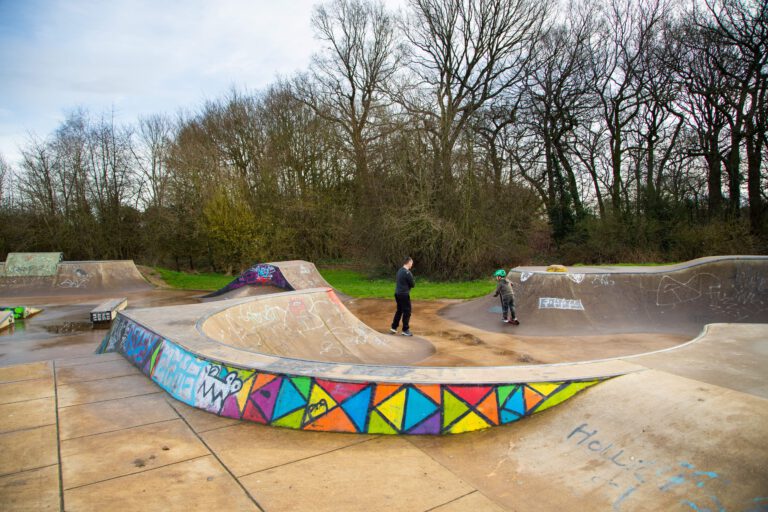
Community consultation forms a key part of the Big Local programme. Some areas directly asked young people what they would like to see in their community, especially when developing physical spaces primarily targeted at young people, such as skate parks and playgrounds. Barrow Island Big Local took young people by bus to nearby playgrounds, to explore and inspire what they would like in a new play park in their community.
Consulting with young people in a context where adults still have the decision-making power is a risk – it can be seen as symbolic or tokenistic (Wong et al., 2010; Hart, 1992). However, it seems that in many Big Local areas, directly consulting young residents was felt to be meaningful.
Big Local partnerships also reflected on how young people felt a greater sense of ownership over spaces they had a say in, potentially reducing anti-social behaviour (a concern of some residents). The North West Ipswich Big Local partnership felt they had seen a legacy of young people becoming community leaders through a community consultation on a skate park in the early years of the programme. Nearly a decade later, they commissioned a youth organisation to deliver activities, that had been set up by individuals who they consulted as teenagers.
Involving young people in decision-making
This article has already identified how encouraging volunteering and consulting with young people can provide small, but effective, opportunities for them to input on decisions made at a community level. However, the Big Local programme could also be seen as providing an important opportunity for younger residents to make key decisions on how funding is spent, by becoming partnership members. While some areas had success involving young people in making decisions on grants allocated through Big Local, overwhelmingly it seems partnerships struggled to engage younger residents as partnership members.
Data gathered by Local Trust between 2015 and 2023 found that the proportion of partnership members aged 24 and under was never higher than 4 per cent. While expanding the age range of those involved was a key ambition of many Big Local partnerships, success was limited. Many reflected that young people who initially engaged were unable to commit long-term due to educational priorities, while others felt that their approach to partnership meetings was not appealing to younger residents (Lyon et al., 2021).
Some of the most successful approaches to bringing young people into decision-making involved allocating Big Local funding to a pot of money that young people could allocate to projects that interested them, with staff helping facilitate the work. Ewanrigg Big Local supported eight young people aged 13 to 17 to develop a campaign aimed at reducing stigma around mental health, a cause they were passionate about. In addition to developing mental health first aid skills, they developed presentation and film-making skills through creating a series of educational films and resources for use in schools, which achieved millions of views. Their campaign was recognised by Prince William over social media, and the group also lobbied local health commissioners and spoke in Parliament on youth mental health. The Ewanrigg Big Local partnership reflected that their investment in a paid staff member to provide long-term coaching for the young people involved had been key in supporting them to become young leaders. When the campaign wrapped up, two young people joined the partnership, ultimately becoming co-chairs in the later years of the programme.
This example aligns with the TYPE framework (Wong et al., 2010). Working with trusted adults, with access to resources granted to them by adult decision-makers (who in the case of Big Local are fellow residents) provides opportunities for young people to draw on the experience and capacity of others. Over time, the confidence and skills this generates can better enable young people to be involved in decision-making spaces that may have originally felt out of reach to them.
Outcomes of investing in young community leaders
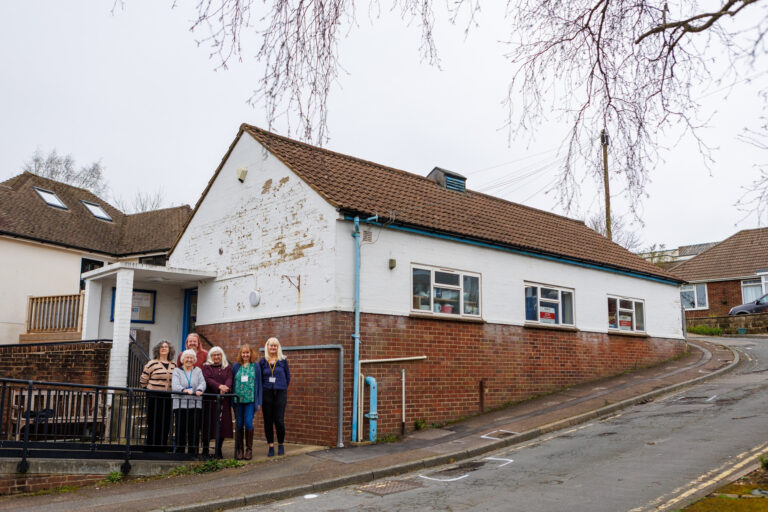
Many Big Local partnerships felt they had played a part in highlighting the positive role that young people could play in communities, challenging existing stereotypes, and building stronger community bonds as a result. Thurcroft Big Local funded a youth worker for their rural village and invited young people to design their own space in the Big Local-funded Thurcroft Hub. This contributed to a sense of ownership from young people towards community spaces, as well as a feeling that their voices were heard. In turn, older residents were inspired by the positive role young people played as they became more involved in volunteering and representing the village at events across the region.
By giving young people opportunities to make decisions on which community needs they would like to address and how, Big Local partnerships enabled them to lead meaningful change in their area. Originally set up as a youth group to bring young people together across the five estates making up the area, Big Local’s Little Voices in Grace Mary to Lion Farm grew into a completely youth-led group. They used Big Local funding allocated to them to create a campaign tackling loneliness among young residents. Their work saw them nominated for an award by the West Midlands Police and Crime Commissioner. The group went on to set up a social enterprise, printing merchandise for local businesses and organisations to bring in additional income for further work to improve the lives of young people in their community.
Through supporting and encouraging youth volunteering, Big Local areas enabled young people to develop skills. As well as improving their confidence and self-esteem, these skills often empowered young people to progress into further qualifications and paid employment, or to set up their own voluntary organisations. This indicates that young people’s exposure to decision-making at a local level, alongside access to volunteering opportunities in the community has the potential to enable youth leadership over the long term.
References
Ellis Paine, A., Wilson, M., McCabe, A., and Macmillan, R. (2021) ‘Now they see us: Communities responding to COVID-19.’ Available on Learning from Big Local. (Accessed 2 April 2025)
Fisher, L. (2025) ‘How did Big Local areas support children and young people in their communities?’ (Local Trust). Available on Learning from Big Local. (Accessed 9 September 2025)
Hart, R. A. (1992) ‘Children’s participation: From tokenism to citizenship’ (United Nations Children’s Fund International Child Development Centre).
Lyon, D., Tunåker, C., Pratt-Boyden, K., and Theodossopoulos, D. (2021) ‘Power in Big Local partnerships’ (Local Trust and University of Kent). Available on Learning from Big Local. (Accessed 2 April 2025)
McCabe, A., Wilson, M., and Macmillan R. (2018) ‘Big Local: Reflections on Community Leadership (Paper Two)’ (Third Sector Research Centre, Sheffield Hallam University, and Local Trust). Available at: ourbiggerstory.com/wp-content/uploads/2024/09/2018_OBS_leadership_paper.pdf (Accessed 2 April 2025)
National Youth Agency (NYA) (2007) ‘Young People’s Volunteering and Skills Development’. Available at: dera.ioe.ac.uk/id/eprint/6643/1/RW103.pdf (Accessed 2 April 2025)
National Youth Agency (NYA) and YMCA (2021) ‘Time’s Running Out: Youth services under threat and lost opportunities for young people’. Available at: nya.org.uk/wp-content/uploads/2021/09/Times-Running-Out-v6.pdf (Accessed 2 April 2025)
Wilson, M., McCabe, A., and Macmillan, R. (2022) ‘Building Big Local Futures: Towards legacies for people and places (Paper 2)’. Available at: ourbiggerstory.com/wp-content/uploads/2024/09/OBS-Towards-LegaciesR3.pdf (Accessed 2 April 2025)
Wong, N. T., Zimmerman, M. A., and Parker, E. A. (2010) ‘A typology of youth participation and empowerment for child and adolescent health promotion’ (American Journal of Community Psychology, vol. 46, issue 1–2). Available at: pubmed.ncbi.nlm.nih.gov/20549334/ (Accessed 02 July 2025)