Q&A article

How did Big Local resident-led groups use arts, heritage and sports to achieve their goals?

Health and wellbeing, Investing in young people, Place-based pride and connection
People in a field playing with a kite with a castle in the background.
Celebration event at Pele Tower: a medieval tower redeveloped with support from CELL Big Local (credit: Mark Savage)

Key points

  • With flexible, long-term funding, partnerships in many Big Local areas chose to prioritise arts, heritage, and sports projects in their communities.
  • A variety of activities fit under these categories. Many were relatively easy to organise and set up, offering flexible opportunities for residents to get involved in local decision-making. Others were larger, complex, and expensive, like improving sports facilities.
  • Three key themes emerged as motivations or outcomes for these activities: building place-based pride and connection, investing in young people, and supporting health and wellbeing. These activities also supported communities during crisis.
  • These types of projects were popular because they brought people together in free or low-cost activities, providing opportunities to have fun, build relationships, and try new things.

Introduction

In each of the 150 Big Local areas, funding was allocated to arts, heritage, and sports activities. Amid sustained national cuts across the cultural and social sector (Department for Culture, Media and Sport, 2025), Big Local partnerships continued to prioritise arts, heritage, and sport. This shows that Big Local communities valued these cultural activities, while partnerships valued them as ways to engage and support residents.

The categories of arts, heritage, and sports encompassed a breadth of activities in Big Local areas. Arts included commissioned public artworks (like murals or sculptures) and creative activities for residents. Heritage projects sometimes aimed to preserve local sites, but also included activities to build local identity through shared histories and storytelling. Sports included organised activities (like sports teams and fitness sessions) and supporting physical activity or active play by improving or installing facilities and shared spaces.

Across arts, heritage, and sports, partnerships were often trying to bring people together; provide opportunities for residents to try new things and have fun; inspire creativity; support health and wellbeing; and create a sense of pride. The activities were easy for partnerships to organise, while being affordable and easy-to-reach for residents. This was achieved by investing in existing community assets to bring activities or services into an area, commissioning local providers, or distributing grants to local groups or individuals.

This article explores how communities used Big Local funding to support arts, heritage, and sports, across three key themes: place-based pride and connection, investing in young people, and health and wellbeing. While a range of material was reviewed, capturing the full scope of activity was not possible as they were so diverse and far-reaching, so examples are used to reflect that diversity.

A Big Local partnership was a group made up of at least eight people that guided the overall direction of delivery in a Big Local area.

Place-based pride and connection

Place-based pride and connection was a central theme in both motivations and outcomes of arts‑, sports‑, and heritage-based activities in Big Local. This gave rise to diverse activities aimed at bringing residents together, encouraging community connection, and fostering pride in place.

Arts‑, heritage‑, and sports-based activities were tools to address wider social symptoms of inequality caused by continued financial cuts to the voluntary sector and essential services. Providing regular activities that were low-cost or free helped remove barriers to participation, embed social interaction in everyday life, and ultimately build social cohesion.

Arts

Using creative, arts-based approaches in communities offers a way of seeing what might not always be visible (Goldstraw, 2017). Involving people in art was a powerful tool for engaging communities, developing local talent, changing reputations of places, and increasing local aspirations (Local Trust, 2018). Creative projects included choirs, craft clubs, yarn bombing (street art using knitted or crocheted yarn), community galleries, dance sessions, music making, and large-scale creative events like carnivals. Residents across Big Local areas demonstrated that communities were enthusiastic about creating art. Art-related projects provided residents with opportunities to take ownership of transforming their local environments, and come together through engaging with social issues and celebrating local history.

The Winterton Big Local partnership prioritised arts initiatives to bring residents together and celebrate local people and history. When community consultation highlighted a desire for more public art, the partnership developed a multifaceted approach. They ran art competitions for residents to design and vote on ideas for new public artwork, they co-created a sculpture trail with local artists to encourage people to explore the area, and funded a statue to commemorate a local astronomer. The partnership used art to transfer decision-making power to residents, helping create a sense of ownership over the physical environment and generate excitement about the area. The process of creating murals, sculptures, and statues helped open discussions about the area and create a sense of belonging and community spirit.

Heritage

Heritage-based approaches can help build local identity and community cohesion by reminding people that they are part of a story that began before they were born and cannot be written for future generations without them (Newson, 2018). Though less common than art projects, heritage was used as a tool to support pride and build connection in Big Local areas.

A key priority for the Central Boston partnership was to improve social cohesion, especially by including young people and those who had recently moved to the area. The Big Local area covered the medieval port and historic market town in Boston, and the partnership decided to celebrate and promote this rich history to unify residents. The partnership designed and developed their own Monopoly-style board game and trumps cards of local heritage sites – like St. Botolph’s Church, Hussey Tower, and Boston Community Stadium – which they distributed to local charities and groups to sell. In 2021, 1,500 board games were sold, raising £44,500 in local funds. The games were a creative approach to generating pride in place, sharing local knowledge, and supporting the local economy.

Success of Boston UK Monopoly and the Trump cards has been huge. Benefits include income raised by charities and greater footfall to their shops as well as raising the profile of the town and giving a positive feel-good factor.” 
Partnership member, Central Boston 

Sports

Responding to limited local civic and social infrastructure (spaces for people to meet, engage, and build relationships in a community), community sports helped rebuild trust, strengthen community connections, and empower residents across Big Local areas. Sports initiatives were beneficial to all residents, but were especially effective at engaging young people, older residents, and marginalised communities.

Sport became a tool for tackling social exclusion and poor mental health. For example, activities like boxing, football, or walking clubs helped create safe and inclusive spaces to connect and participate in the community. Community-led sports initiatives also gave volunteers opportunities to develop confidence, leadership skills, and a sense of ownership over how activities were run in their area (Herman, 2019).

Prioritising developing pride, improving community infrastructure, and providing new and educational opportunities for young people, the Dewsbury Moor Big Local partnership saw rugby as a way to develop community inclusion through sports heritage. Recognising the local significance and popularity of the rugby league, Big Local funding was used to expand the Dewsbury Moor Sports Club, support surrounding rugby clubs and organisations, purchase rugby equipment, and refurbish sports facilities. Big Local funding was invested in the British Asian Rugby Association to encourage local South Asian communities to get involved with local teams, and in transport costs to enable residents to attend games across the North West.

Investing in young people

Arts, heritage, and sports activities were often used to support and invest in the wellbeing of young people in Big Local areas. In the context of reduced youth provision and closing youth centres, partnerships prioritised free or subsidised activities, giving young people something to do while reducing financial burdens on families, particularly during the school holidays.

Activities varied but the aims and outcomes for young people were similar. Arts, sports, and heritage activities created safe and inclusive spaces for socialising; supported young people to try new things; built confidence and skills; and connected them to where they lived.

Local Trust has explored how Big Local areas supported children and young people in their communities in another article.

Arts

Arts-based initiatives made space for young people to be creative in ways that connected them to their community. In Conniburrow, a resident community artist worked with local schools to develop a community orchard. Young residents were involved in designing the space, as well as planting and growing produce. The community orchard became a base for many other creative activities, for example the community artist led exploratory walks around Conniburrow, where children observed their local environment, took photographs, and made charcoal drawings. As well as supporting their creativity, these activities helped give young residents a sense of ownership and curiosity about where they live.

Similarly, a local artist commissioned by Leigh West Big Local involved schoolchildren in several creative projects, like drawings for the Wall of Fame that celebrated local people and designs for vinyl bollard wraps to brighten up the neighbourhood. As well as giving young people the opportunity to get creative and have fun, it connected them to their area and allowed them to make visible contributions to public artworks.

Heritage

Heritage activities often had a less direct connection to young people, however in some areas were used to connect young residents to their community and its history. Projects like this helped to root young people in their communities, strengthen identity, and build connections between generations.

For example, a history project in Plaistow South trained students from a local sixth form college to interview older residents and lead reminiscence sessions’ to research local history. Young people developed new skills in research and workshop facilitation while building relationships across generations and gaining a deeper understanding of the area’s past. The project resulted in a touring exhibition visiting local schools, libraries, and community centres, before being uploaded to a website with archive photos and reflections from the older residents.

Local Trust has explored how Big Local supported older residents in another article.

Sports

Investment of Big Local funding in sports provision supported young residents to be active and social. In many Big Local areas, partnerships prioritised removing financial and practical barriers for families so young residents could take part in activities at little or no cost.

In Bradley, for example, the partnership focused on widening access through free local sports activities. After community consultation revealed that residents wanted a local football team, enabling children to play without travelling outside the area, Bradley Big Local commissioned qualified football coaches to deliver free sessions for young people of all experience levels. The partnership also distributed free family swim tickets for the local leisure centre and funded a local charity to run a camping trip, where children could take part in cycling, walking, and archery. This kind of provision supported families who might otherwise struggle to fund extracurricular activities, while giving young people the opportunity to develop their skills and take part in team-building activities.

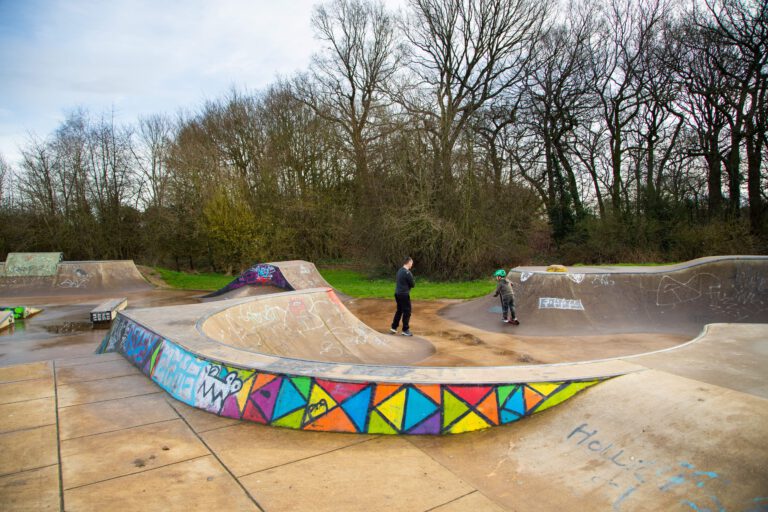
As well as organised activities, Big Local funding was also invested in community assets and spaces that supported young people to stay active and play. This included refurbishing existing play areas or installing new playground equipment, improving accessibility for children with different mobility or sensory needs, and developing multi-use games areas (MUGAs), cycling tracks, or skate parks. Investment in recreational spaces created lasting assets for young people to socialise, play, and exercise.

Health and wellbeing

Arts and sports were also used as a means of supporting residents’ health and wellbeing. For Big Local partnerships engaged with social prescribing (connecting people to community activities to improve wellbeing), arts and sports initiatives were often at the centre of funded activities.

Arts

In Tonge with the Haulgh, the Arts on Prescription project used art as a form of therapy, providing women with a safe and supportive space to be creative while talking about their health, home life, families, and aspirations. Participants spoke of how the group supported them through challenging times, and they developed new skills and hobbies. The project quickly grew in popularity, with increased referrals from GPs and practitioners over time.

Local Trust has explored the community-led approach to social prescribing in Big Local in another article.

More broadly, arts activities were used to address loneliness and reduce stigma around experiencing poor mental health. In Warwick Ahead, a weekly craft group was created after formal training on anxiety and loneliness struggled to engage residents. The partnership found that informal, creative sessions offered a more welcoming space where people could share experiences and develop a sense of purpose. In East Coseley, crafts were used to raise visibility and awareness about mental health and loneliness. The Pom Poms 4 Loneliness campaign hung pom-poms (knitted by residents) on trees, fences, lampposts, and road signs across the neighbourhood, with a label providing information on how to seek support. This pom pom bombing’ quickly attracted residents’ attention, earning them a regular slot on a local radio station and over 3,000 followers on the dedicated social media page.

It’s easy to open up and talk here. I didn’t interact with anyone before. This takes my mind off things and helps with my anxiety and depression.” 
Resident, Warwick Ahead 

Sports

Sports activities had clear and direct benefits to physical and mental wellbeing. In many areas Big Local funding was invested in affordable, easy-to-reach, inclusive activities that encouraged residents to be more active, often targeting groups that might be less likely to engage with traditional sports activities. For example, the Pimlico Million partnership established a weekly walking football group for men, providing a low-impact way to re-engage with sport. What began as a small, Big Local activity quickly developed into a self-run club, with participants reporting improvements in fitness alongside new social connection and better mental health.

I feel like I’ve been dug up, given a ball and told you can live again.” 
Resident, Pimlico Million 

Local Trust has explored what Big Local partnerships did to improve local health outcomes in another article.

Responding to crisis

Arts and sports were also valuable ways of supporting residents’ health and wellbeing in times of crisis, as highlighted by the Covid-19 pandemic. During the pandemic, many Big Local partnerships coordinated online fitness sessions, created socially distanced activities for residents to stay active and connected, and distributed craft packs to homes to support residents’ wellbeing. Arts and sports were shown to be effective ways of responding to more immediate and urgent wellbeing needs of communities, and as a result many Big Local partnerships increased their focus on health and wellbeing after the pandemic.

Local Trust has explored how Big Local partnerships responded to the Covid-19 pandemic in another article.

Reflections and learning

Arts, heritage, and sports activities were valued by residents in Big Local areas and often prioritised by them. They were appealing to partnerships as they delivered meaningful outcomes (like improved health and wellbeing, community cohesion, and increased pride and belonging) while often being relatively low cost, quick to establish, and administratively simple. However, this was dependent on the availability of suitable local spaces and community assets where activities could be delivered. Alongside these outcomes, arts, heritage, and sports activities created space for residents to have fun, try new things, and engage with their communities, often at little or no cost.

References

Goldstraw, K. (2017) Empowering communities through the arts’ (Local Trust). No longer available.

Herman, R. (2019) A level playing field: How sport can unite and transform communities’ (Local Trust). No longer available.

Local Trust (2018) The power of art’. No longer available.

Newson, C. (2018) Designs on the past: What can history do for hard-pressed communities?’ (Local Trust). No longer available.

Tiller, C. (2021) How can participatory art give rise to community empowerment?’ (Local Trust). No longer available.

West, T., and Neiva Ganga, R. (2025) Impacts of changes to local authority funding on small to medium heritage organisations’ (Department for Culture, Media & Sport). Available at: gov.uk/government/publications/impacts-of-changes-to-local-authority-funding-on-small-to-medium-heritage-organisations/impacts-of-changes-to-local-authority-funding-on-small-to-medium-heritage-organisations (Accessed 18 May 2026)