Q&A article

What does success mean in Big Local?
A research article exploring what success meant in Big Local, based on longitudinal work with 15 Big Local areas as part of the Our Bigger Story evaluation.

Big Local was a unique place-based funding programme, giving 150 disadvantaged areas across England just over £1 million each to spend over 10–15 years (between 2010 and 2026). Within the Big Local programme, residents led decisions about how to spend the long-term community investment in their area, with a focus on making them even better places to live. The programme was delivered by Local Trust and funded by the National Lottery Community Fund. There were no top-down targets or competition for funds and Big Local’s original aims were intentionally broad:
You can learn more about Local Trust and how areas were selected on the About page, while the Timeline of Big Local shows key milestones throughout the lifetime of the programme.
This article brings together all the research material on Learning from Big Local to form an evidence-based Theory of Change, explaining how the activities of the Big Local programme led to the outcomes that were – largely qualitatively – documented.
An interactive and visual version of the Theory of Change will be available through the ‘About’ area on the website from Autumn 2026.
While a Theory of Change is usually created at the outset of a programme to guide evaluation, as the Big Local programme was a new approach in resident-led change and considered experimental, this Theory of Change wasn’t created until the programme was almost complete. How this Theory of Change was developed is discussed in detail in the approach section at the end of this article. It is intended to support the design and delivery of future resident-led programmes, and to summarise the learnings from Big Local in one place.
You can learn about different aspects of the programme in detail by browsing the resources on this website, all searchable through themes.
The information provided here is presented as linear and is only a representation of what happened in all 150 areas, over the course of 10-15 years. However, not all areas did everything that is described. The activities and outcomes did not happen in neat succession, and many activities and outcomes feed into others. Not all areas completed the programme through the Big Local resident-led decision-making model, but 95% did.
The Big Local Theory of Change presented in this article represents an idealised version of the activities and outcomes involved in Big Local, while the risks and challenges capture what hinders this, and represent where Big Local activities were less successful. While no model can be complete and correct, this one is intended to be useful in designing and delivering future resident-led work and providing an overview of the programme.
If you are unfamiliar with Theories of Change, please note the following terms used in this article:
The Theory of Change is described in a series of sections, each one building on the last.
The following key terms from the Big Local programme are also used throughout.
A Big Local partnership was a group made up of at least eight people that guided the overall direction of delivery in a Big Local area.
A locally trusted organisation (LTO) was the organisation chosen by people in a Big Local area or the partnership to administer and account for funding, and/or deliver activities or services on behalf of a partnership. Areas might have worked with more than one locally trusted organisation depending on the plan and the skills and resources required.
Big Local areas were selected on the basis of being disadvantaged compared to other areas in England, and having previously missed out on National Lottery funding. There is high demand and complex need within Big Local and similar area populations, exacerbated further in crises, which cannot be addressed by £1m and the voluntary efforts of residents. Systemic issues, such as economic inequality, need to be tackled with investment at scale.
The extent to which Big Local tackled systemic issues is explored in an article.
Areas had different histories and starting positions, with some communities having neighbourhood plans while others had communities in active conflict; with some residents starting with experience and confidence e.g. in managing resources, and others not; and with some areas having already been consulted and let down in regeneration or other work locally, resulting in mistrust and fatigue. Areas did better when they had boundaries and a name that all residents could identify with, and some areas changed the original boundaries to better suit their community. The size of the area also impacted the amount of engagement and capacity needed relative to the size of the local population and unmet needs. In 2011, Big Local area population sizes ranged from 1,237 to 17,775, with an average of 7,393.
All areas had shared, but also differing, needs and contexts. Big Local took an asset-based approach (which recognises the existing strengths and resources of communities and people), which meant that while local infrastructure (such as local spaces, voluntary and community organisations, council and health services) varied significantly, all partnerships were encouraged to work with what they already had in the area. This resulted in Big Local partnerships receiving in kind support to varied extents. Each Big Local partnership set and delivered on local priorities, gathered feedback about projects and adapted to that feedback differently.
An article explores what Big Local communities prioritised across the programme as a whole, and the area summaries provide information on how each Big Local partnership approached delivery and used the funding for community benefit.
Big Local began in the wake of ongoing austerity measures, leading to a decrease in local services such as youth and family services. Most notably, throughout Big Local, partnerships and their wider communities were impacted by the Covid-19 pandemic and cost of living crisis. Population changes also impacted some areas, alongside shifts in public discourse around racism.
How diversity and inclusion developed varied according to each partnerships’ starting position and needs and is discussed in an article.
While the programme was resident-led, some external constraints to the resident-led approach could not be removed. This included the deadline for spending all funds by 2026 and legal requirements, for example around employment or health and safety. Residents were supported to navigate this as part of the programme.
An article explores how the Big Local values were upheld in practice throughout the programme.
Finally, readers should hold in mind that these activities and outcomes, delivered by volunteers over many years, happened in hyper-local areas. Partnership groups were personally – not just professionally – intertwined, and moments of celebration, disappointment and conflict took place among neighbours. Those accountable for how the Big Local funding was spent were not in an office far away, they were living in the community.
The inputs were fundamentally what enabled Big Local to happen. These included the design of the Big Local programme; the funding provided; Local Trust’s support offer; the Locally Trusted Organisations who acted as ‘banker’ and critical friends to residents; the residents in Big Local areas; the resident decision-making group known as the Big Local partnership; and local infrastructure and wider voluntary and community sector organisations. Each of these is discussed in turn.
The programme was fundamentally focused on working directly in disadvantaged hyper-local areas, that hadn’t previously received National Lottery Funding. Big Local worked directly with residents, providing long-term support and using the Locally Trusted Organisation model to distribute funding. The programme design included the Big Local values that Local Trust was guided by, including being patient, non-judgmental and resident-led. It also prioritised resident capacity building, with a focus on asset-based community development. Local Trust staff responded to the needs and worked at the pace of residents. The long-term flexible and non-prescriptive funding meant that residents could decide how they went about meeting the intentionally broad outcomes of Big Local, while the programme guidance and expectations provided to Big Local partnerships and those supporting them provided some parameters, such as partnership membership and light-touch reporting requirements.
You can learn about the Locally Trusted Organisation model, the values of Big Local and the support provided to residents in other articles. You can learn more about Local Trust, Big Local areas and the original outcomes on the About page.
Each of the 150 Big Local areas received £1m in non-competitive core funding, provided directly to Big Local partnerships through the Locally Trusted Organisation model. Additional funding was provided for training and specialist support for partnership members, and the ‘getting started’ fund allocated specifically for early community engagement in each area. An additional £150k was also given to each area to distribute the interest gained from the Big Local endowment investment.
You can learn about how the Big Local endowment was managed in an article.
In-area support was provided in every Big Local area, including reps/advisors that acted as a day-to-day critical friend to Big Local partnerships, and area co-ordinators that focused on assessing needs and co-ordinating support offers. Local Trust also organised opportunities for learning and networking among Big Local partnership members, through events and activities. Local Trust also commissioned specialist support offers, provided by external specialist organisations and tailored to the needs of different Big Local partnerships, and provided targeted training and development support for Big Local partnership members through the Community Leadership Academy. This support offer was underpinned by a resident-led and light touch process for making plans and drawing down funds. Plan reviews helped residents to learn over time, but evidence of outcomes was not required to draw down funds; funding was granted based on Local Trust’s assessment of plans. Finally, alongside support to deliver the programme and resolve issues, ad-hoc specialist support from the wider Local Trust team was provided, such as communications and evaluation.
You can learn about how in-area support was provided and changed over time, the importance of networks and networking in Big Local, support provided to partnerships and the Community Leadership Academy in other articles.
The Locally Trusted Organisation in each area acted as ‘banker’, accounting and administering funds from Local Trust for the Big Local partnerships to use, and reporting to both Local Trust and residents. They also provided specialist support, local knowledge and networks, staff time and physical space to the partnerships, and provided management structures for employing paid staff on behalf of the partnerships. Finally, the Locally Trusted Organisations held legal, regulatory and financial obligations, such as insurance.
You can learn more about the Locally Trusted Organisation model and the effectiveness of this model, and about paid workers in Big Local, in other articles.
Within the 150 hyper-local communities selected to be the Big Local areas were the residents, with differing local knowledge, priorities, needs, demographics and views. The time, skills and interests of these residents also formed an important input to the programme, as did bespoke datasets about the needs and demographics within the areas created for the Big Local programme.
You can learn about what residents in Big Local areas prioritised and the bespoke dataset created for the Big Local programme in other articles, and the prevalent needs identified in Big Local areas by Local Trust’s policy team in a report.
Within these Big Local communities were the residents who came forward to form Big Local partnerships, with their time and willingness to:
You can learn about early community engagement in Big Local in a report. You can learn about how partnerships came together to make decisions, and how the wider community was engaged in Big Local through volunteering and small grants in other articles.
Beyond this were the physical spaces within Big Local areas where delivery of projects, community engagement and meetings could take place, along with public agencies and wider public services within Big Local areas – such as local councils, health services and housing associations – and local businesses, voluntary and community sector organisations, and grassroots groups. This also includes the interest and ability of local stakeholders to support and offer resources to Big Local partnerships. These were all directly linked to the highly varied amounts of in-kind support from local stakeholders and organisations, including financial donations, (the use of) physical spaces, and the time and expertise of staff and volunteers. Further to what was available locally, a final input was the wider voluntary and community sector, including specialist national organisations and potential collaborators, and national funding bodies who were potential funders for additional work or continuing beyond the Big Local programme.
You can learn about the importance of assets and spaces in Big Local, and what enabled good relationships between Big Local partnerships and local government, in other articles. You can learn about the additional resources used by Big Local partnerships early in the programme in a report.
Having these inputs in place meant Big Local partnerships could deliver the foundational and early activities.
The most fundamental foundational activity was forming a group of residents as a decision-making group in each area, which was sustained and/or re-formed over time. These were known as Big Local partnerships and had to have at least eight members, with a majority being residents within the Big Local area. The key risk was that the resident-led approach could not be maintained if the Big local partnership could not be sustained, due to interpersonal conflict, conflicts of interest, or a lack of volunteers or capacity, including due to people leaving the area. The support provided and the long-term timeframe allowed for re-development and recovery from disruption to the group. Though, as a last resort and only when all other options were exhausted, an alternative delivery approach was used in seven of the 150 Big Local areas. Another risk was that Big Local partnership members could experience stress, causing burnout for resident leaders that were foundational for the delivery of Big Local. Residents strengthened their capacity and developed skills in setting boundaries, collaborating and delegating over time, and designed their own governance structure e.g. sub-groups. Individual volunteers could also step their commitment to the partnership up or down over time.
You can learn about how Local Trust approached using an alternative delivery model in Big Local, how decision-making impacted Big Local partnership members’ health, and how partnership members built their skills over time in other articles.
With this core foundation in place, Big Local partnerships could then create and develop their decision-making models. Key challenges were that decision-making could replicate existing power structures and unevenly distribute the benefits and challenges of being involved in the Big Local partnership. To mitigate this, Local Trust offered guidance and support and set expectations about equality and inclusion.
You can learn about how residents made decisions and how Big Local supported resident-led decision-making in other articles.
Big Local partnerships could also select, and keep or change over time, their Locally Trusted Organisation (LTO), occasionally forming a legal entity to become their own LTO. A key challenge was that the availability of organisations to be LTOs was sometimes limited. Other challenges were the resources or capacity available within the LTO not meeting the residents’ needs, and payments to LTOs being tied to Big Local partnership activity. Key enablers were Local Trust offering support and guidance to LTOs, including providing additional funds for additional support work.
You can learn about the LTO model and the effectiveness of it in other articles.
The final element of the foundations for Big Local was Big Local partnerships consulting the wider community about their needs and priorities, to inform the first Big Local plans. The key risk was low engagement from, or with, the wider community, while key enablers were dedicating time and resource to (targeted) outreach. This often utilised the time of paid workers and sometimes involved allocating funds to external partners.
You can learn about the crucial role of paid workers in Big Local in an article.
Big Local partnerships created, evaluated and revised their plans, learning and improving over time. While light-touch reporting requirements was aligned to the values of the Big Local programme, this sometimes made it hard to demonstrate achievements to the community or other funders, and meant missing out on some opportunities to embed learning. Though, partnerships were encouraged to take up support offered by Local Trust or to fund their own evaluations with specialists.
You can learn about how partnerships built their capacity over time and how in-area evaluation was supported in other articles.
Big Local partnerships made decisions on how to use Big Local funding to benefit the wider community. Key challenges were around conflict within the Big Local partnership; low confidence to spend the money; and communication barriers between partnerships, Local Trust and Locally Trusted Organisations causing delays and disengagement. Though, conflict was worked through and confidence built gradually over time, with ongoing support.
You can learn about how residents chose to use their funding, conflict in Big Local and how conflict was managed in other articles.
Big Local partnerships accessed spaces for meetings and delivering projects, through renting or being gifted them, and – particularly later in the programme – through buying or building new spaces. The key challenge was the low availability of local assets and spaces in some areas, creating significant barriers early in the programme before residents had developed new spaces. In turn, the key enabler was the availability of local assets and spaces, including from the Locally Trusted Organisation, for residents to access and/or improve over time.
You can learn about the importance of assets and spaces in Big local in an article. You can learn about enabling community control over assets in a resident-led programme in Learning from Big Local guidance.
Big Local partnerships accessed training and support from Local Trust. A key challenge here was that the support needs of Big Local partnerships, and the capacity to provide support in each area, varied significantly between areas and over time. A key enabler here was Local Trust being aware of the support needs in each area, providing flexible support and encouraging participation.
You can learn about how support was provided and how Local Trust improved its awareness of support needs over time in other articles.
Big Local partnerships built new, or strengthened established, relationships with local voluntary and community sector organisations, the local council/s, health services and wider stakeholders. A key risk was if resident leadership was not understood or valued and supported by local stakeholders, including residents, local authorities and occasionally including Locally Trusted Organisations. This was mitigated through paid staff explaining and supporting resident leadership with stakeholders and the community. Wider enablers included having a shared vision, values and purpose between Big Local partnerships and collaborators; the impact of Big Local projects, particularly crisis response, building the perceived value of Big Local; and purposeful involvement (or not) of stakeholders in Big Local partnership meetings.
You can learn more about the importance of networking in Big Local and what enabled positive relationships between partnerships and local authorities in other articles.
Big Local partnerships continually engaged the wider community to shape plans using a range of approaches. They promoted their work to residents in the wider community and built engagement through the delivery of projects. And, Big Local partnerships responded to guidance provided by Local Trust and reflected on the inclusiveness of their plans and decision-making processes over time. The key risk was that decisions made by Big Local partnerships without enough wider engagement were based on assumptions, with varied understanding, interest and confidence in addressing equality and inclusion among resident leaders and supporting staff. Enablers were building trust in the community through visible change, ‘quick wins’ and projects that residents prioritised; working with local organisations to identify needs and reach residents; specialist support and clear expectations; and encouragement to reflect, with time for Big Local partnerships to develop.
You can learn about how partnerships engaged the wider community and how inclusive Big Local was in another article.
Big Local partnerships delivered projects to meet local needs, often through collaborations and allocating funds to other groups and organisations. Big Local partnerships also employed paid workers, usually through their Locally Trusted Organisation, to engage the wider community and local stakeholders, manage volunteers, and co-ordinate projects. A key challenge was low availability of local resources, relevant skills and capacity, or a lack of shared direction between the Big Local partnership, paid workers and their Locally Trusted Organisation. Key enablers were the skills and existing local relationships or knowledge of Big Local partnership members, Locally Trusted Organisations, paid workers and support staff, and time to learn the local landscape, find specialists and build, re-build and maintain relationships.
Big Local partnerships shared knowledge and resources with collaborators, and vice versa. A risk was that Big Local partnerships’ ability to get things done could be hindered by local powerholders. For example, due to bureaucracy, the complexity of systems or disinterest and lack of support. In turn, key enablers were supportive local authorities and wider organisations, providing advice and time to resident leaders; clear roles and responsibilities; and champions on both sides giving their time to administer, monitor and negotiate projects.
These foundational and early activities led to outputs and interim outcomes, providing the building blocks that helped project activities reach their intended outcomes.
These outputs included:
The interim outcomes were:
You can learn about in-area evaluation, how inclusive Big Local was, and the alternative delivery approach taken with seven Big Local areas in other articles.
With these in place, project activities were carried out to form the delivery of Big Local. These project activities, if challenges were overcome, led to project-relevant outcomes. The project activities were determined by the priorities of the local community so varied across areas – not all areas did all these activities.
Major asset projects were created, or improvements were made to local community hubs and/or green and recreational spaces. Smaller asset projects focused on making visible physical improvements in the area. For example, public arts, planting trees or organising litter-picking. New activities and key services were delivered locally in new or improved community hubs.
Key challenges were rising construction or running costs, bureaucratic delays and tensions between multiple stakeholders involved in major asset projects. Enablers that mitigated these were having a good relationship between resident leaders and the local authority; time to negotiate and adapt plans; knowledge of community rights to asset transfers; and specialist support.
A further risk was loss of community support for major asset projects due to delays or unforeseen problems, which could be mitigated by maintaining trust and managing expectations through communication with the wider community, while the flexible long-term funding allowed Big Local partnerships to adapt their plans.
In total, 200 assets were created or improved across the whole Big Local programme, and the outcomes from these activities were:
To illustrate these outcomes, the Bourne Big Local partnership supported the development and the long-term future of a purpose-built community hub, while Kirkholt Big Local partnership created an award-winning green space. You can learn more about Bourne Big Local and Kirkholt Big Local by visiting their area summaries.
You can learn about the importance of assets and spaces in Big Local and how they were kept in community control, and art projects in Big Local, in other articles.
Projects were delivered to meet basic needs, such as food provision, energy saving and financial advice, and providing household essentials at low or no cost. Other projects addressed wider needs. These were often health focused (such as physical activity, education and counselling activities) and employment focused (such as support to develop skills, gain qualifications and look for employment). Big Local partnerships also responded to crisis by re-purposing resources, co-ordinating local response and providing direct support to residents, such as food parcels.
Key challenges were a lack of engagement from residents, sometimes due to stigma; services not being able to meet demand; people coming to rely on support that is discontinued after Big Local; and some issues, such as housing, being too complex to address through Big Local. Enablers were delivering services where people already were and not having conditions for accessing support; adapting to feedback; networks and strong relationships with other local actors; and accessing or funding additional resources such as transport or physical spaces. A risk with crises was that they could interrupt delivery and weaken other projects. However, crises can also act as an enabler to strengthen collaborative relationships and bring in funding and short-term volunteers. Further enablers, particularly for an effective crisis response, were developing a strong reputation and network, including building trust with residents.
These activities led to the following outcomes:
To illustrate these outcomes, in WestRaven, 200 residents per week were supported through a community fridge and 50 residents secured employment in Wargrave through the Big Local job club. You can learn more about WestRaven Big Local and Wargrave Big Local by visiting their area summaries.
You can learn about how Big Local partnerships responded to the Covid-19 pandemic, the cost of living crisis and systemic issues in other articles. You can also learn about how Big Local improved health and local economies, and how Big Local partnerships worked with health agencies, in other articles.
Projects were delivered to connect and engage the community, with a range of activities and events organised and grants given to local organisations. Volunteering opportunities were created for residents, who could support events, activities and services. Big Local partnerships did targeted outreach to engage specific groups of residents in services, decisions or volunteering, especially young people. Resource and funds were also allocated to training and support for volunteers, and paid staff, to deliver support to residents.
Key risks were low attendance at events and activities, and a lack of diversity or low numbers of volunteers. Enablers were free and low-cost events and activities based on resident views, including targeted groups, and having a range of volunteering opportunities (in terms of task and time) with targeted and person-centred support.
The outcomes of these activities were:
To illustrate these outcomes, over 1000 residents in Noel Park attended the Big Local Summer Festival in 2024 and 50 volunteers in Woodlands Speaks were trained and supported to run Woodlands Library. You can learn more about Noel Park Big Local and Woodlands Speaks Big Local by visiting their area summaries.
You can learn about the activities that brought residents together in Big Local, along with volunteering and how young people were engaged in other articles.
Grants and support were provided to local businesses, entrepreneurs and residents with new ideas. In turn, new groups were created to manage projects and spaces, including constituted and incorporated groups, paid staff and ‘friends of’ volunteering groups. A key risk was unclear or complicated processes for accessing and accounting for funding can be off-putting to potential grantees. Simple applications with encouragement and support to apply from Big local partnerships or paid workers was in turn a key enabler, along with minimal reporting requirements, and participatory approaches to involve the community in allocating small grants and develop awareness of them.
These activities led to the following outcomes:
To illustrate these outcomes, in Ewanrigg the Big Local partnership awarded over £132k in small grants to 72 projects, while North West Ipswich awarded 66 grants totalling £105k. You can learn more about Ewanrigg Big Local and North West Ipswich Big Local by visiting their area summaries.
You can learn about grant schemes in Big Local in another article.
Big Local partnerships advocated or supported other local groups to advocate for community voice to local powerholders, negotiating directly or engaging in formal consultation frameworks. They also convened networks to make collective decisions and deliver or fundraise collaboratively.
Key enablers for these activities were community leadership and negotiation skills among residents; powerholders being open to or having an interest in resident voice shaping local plans; opportunities for organisations to connect at events as well as formal meetings; and additional resource from Local Trust to support networking efforts. A key risk was that, even with these activities and enablers in place, redevelopment projects go ahead that negatively impact residents and/or Big Local projects and plans.
Outcomes of these activities were:
To illustrate these outcomes, 80 residents were actively involved in bringing community voice to a major regeneration project in PEACH, and in SW11 the Big Local partnership brought together over 55 local organisations and stakeholders to identify local issues, with six collaborating long-term. You can learn more about PEACH Big Local and SW11 Big Local by visiting their area summaries.
You can learn more about regeneration in Big Local in a report, and how Local Trust supported networking in Big Local in another article.
Over time, these project activities and outcomes contributed to long-term outcomes, which varied according to what communities chose to focus on.
These were:
These activities and outcomes also contributed to meeting the original intended outcomes of Big Local:
You can learn more about success in Big Local in another article.
These long-term outcomes contributed towards the legacy of Big Local and its potential long-term impact. While activities may have come to an end when Big Local did, they left a legacy and had an impact during, and potentially beyond, the Big Local programme. The extent to which the following conditions for long-term impact were in place at the end of Big Local varied according to what happened in each area.
Sustainable models needed to have been developed for projects, networks and assets. This may have involved resident grantees being supported and encouraged to apply for further grants by Big Local partnerships or paid workers.
The challenges were resource strains due to unsuccessful fundraising and/or reliance on a few people; and assets being financially unsustainable, taken back by landlords or redeveloped as part of wider re-development in the area. Enablers that helped to mitigate this were community support, use of spaces and volunteering creating capacity and demonstrating the value of assets; knowledge of legal protections; income, for example through hiring out the space; good relationships with the local authority and other stakeholders; and fundraising skills.
These activities may have brought additional funds into the area, or more and better-connected services being accessible to residents. They lay the groundwork for the potential long-term sustainability of projects and assets, and meant more residents accessed support, such as Citizens Advice or local council and health services. Over time, this ultimately leads to more residents having their needs better met.
For example, over £600k of additional funds were raised by St Matthews to develop physical assets and activities in the area, while Lawrence Weston raised an additional £4m through extensive collaborative working on a landmark local wind farm. You can learn more about St Matthews Big Local and Lawrence Weston Big Local by visiting their area summary pages.
You can learn about how much additional funding was estimated to have been brought in throughout Big Local in a report, and about how to support residents to take control of community assets in Learning from Big Local guidance.
Big Local partnerships needed to have engaged with support offers and developed specialist skills throughout Big Local, such as developing assets, community engagement, and fundraising. This activity throughout the programme supported the development of a core group of resident leaders, with strong ways of working developed over time, who may remain active beyond the Big Local programme. The key risk was challenges within the Big Local partnership not being resolved within the 10-15-year Big Local timeframe. To counter this, throughout the programme, support was provided responsively by Local Trust, adapting to the needs of Big Local partnerships at different times. As a last resort, an alternative delivery model was put in place in seven of the 150 Big Local areas towards the end of the programme.
These resident leaders may have formed (part of) new constituted or incorporated groups to continue Big Local projects. Alternatively established, or new, local organisations needed to have taken on and continued Big Local projects. A key challenge here was when new legal entities were set up alongside the Big Local partnership during Big Local, which caused confusion around roles and conflicts of interest. In turn, creating clear roles and responsibilities, with protocols for navigating challenges, countered these challenges.
These activities led to more community leaders and volunteers, enabling the long-term potential for projects; an improved sense of confidence and self-efficacy among resident leaders and volunteers from the wider community; and more residents taking up wider local leadership roles or contributing to local projects and forums. They also mean that a quick response to future crises is possible by repurposing resources, including volunteers, assets and wider networks developed through Big Local. Over time, this ultimately leads to the community being more resilient to crisis.
Of 450 Big Local partnership members surveyed towards the end of Big Local, 340 planned to continue volunteering beyond Big Local. 123 legacy organisations were also created or supported by Big Local partnerships, to continue after Big Local.
You can learn about how Big Local enabled community power in another article, and about how to deliver a resident-led programme in Learning from Big Local guidance.
In the final years of Big Local, the Learning from Big Local project was set up to capture learning, research and stories from across the programme, to share with those designing, funding and delivering future resident-led programmes. The website includes a summary of what each of the 150 Big Local areas did and a series of Q&A articles answering key questions about the programme. These drew on traditional qualitative research methods (conducting desk research, interviews and focus groups, undertaking thematic analysis, and using team co-analysis sessions as a space for reflective practice). Area summaries drew on plans and reports written by residents and staff members throughout the Big Local programme, alongside interviews and workshops delivered towards the end. Q&A articles drew on research reports and interviews with staff, and sometimes area summary content, with the outputs sharing both the findings and the statements that senior Local Trust staff felt important to share (in lieu of the organisation existing in the future to field questions). The website also includes a selection of research and policy reports produced throughout the lifetime of Big Local.
You can learn more about how this – vast and largely qualitative – programme of research was developed in an article about Local Trust’s approach to research.
Towards the end of the Learning from Big Local project, this material was systematically reviewed to develop an evidence-based Theory of Change; a synthesised view of the whole programme. The Local Trust research team worked with a learning partner, who provided additional capacity and an external perspective, offering challenge and support throughout the process. The Theory of Change process was designed to include many members of staff, stakeholders and Big Local residents to review the overarching story emerging from written evidence, and collectively refine this representation of Big Local.
In total, 150 area summaries and approximately 50 articles and 100 research reports were analysed, grouped into the Learning from Big Local (LfBL) themes.
The data from the articles and area summaries was systematically and thematically coded by the Local Trust research team to the elements of a Theory of Change:
This created a full picture of all the different types of activity, risks, outcomes and so on, and included the number of occasions each type had been captured (sometimes 70 times or more, sometimes just once). This data was analysed and workshopped among the Local Trust research team, taking each theme in turn. The findings across all of these were then drawn together into one overarching Theory of Change for the Big Local programme, which was workshopped among the team to ratify and refine it, mostly to improve its clarity.
Alongside this process, the learning partner analysed the research reports and articles against a coding framework allowing a frequency analysis of themes and consideration of the relative strength of research findings. They used this analysis to develop a Theory of Change with a focus on the inputs, outcomes, challenges and contextual framing of the piece. This early version was used as the basis for two workshops with the Trustee Board and Senior Management Team at Local Trust. The learning partner Theory of Change was then used to ratify, challenge and refine the (more detailed and complex) version being developed by the Local Trust team.
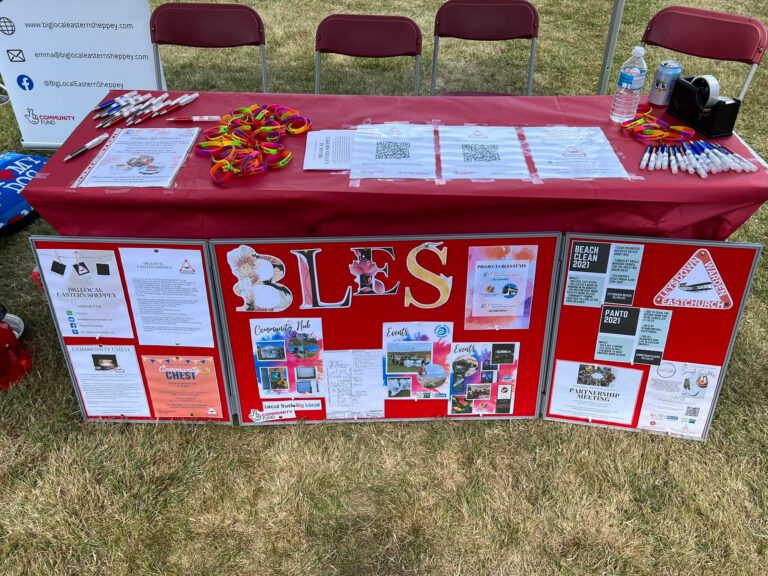
This finalised draft was shared with the Senior Management Team for further refinement. A summary version was then created based on this final output, which was shared with residents at a final Big Local celebratory event. A large board was displayed at a stall at the event, which residents were encouraged and supported to engage with. In total, 40 residents from 25 Big Local areas reviewed the Theory of Change. The response was largely positive, with residents appreciating the visual format, and often resonating with points around personal skill and confidence development, and the importance of building strong foundations through early activity. Though, some points of challenge and refinement were also shared, which were addressed in the final, published, version.